From account setup and verification to content strategy and creator partnerships, here is what you need to know before your first sale.
Launch your TikTok Shop with a clear plan
Set up your TikTok Shop the right way and start converting viewers into buyers from day one.
TikTok Shop is not just another sales channel
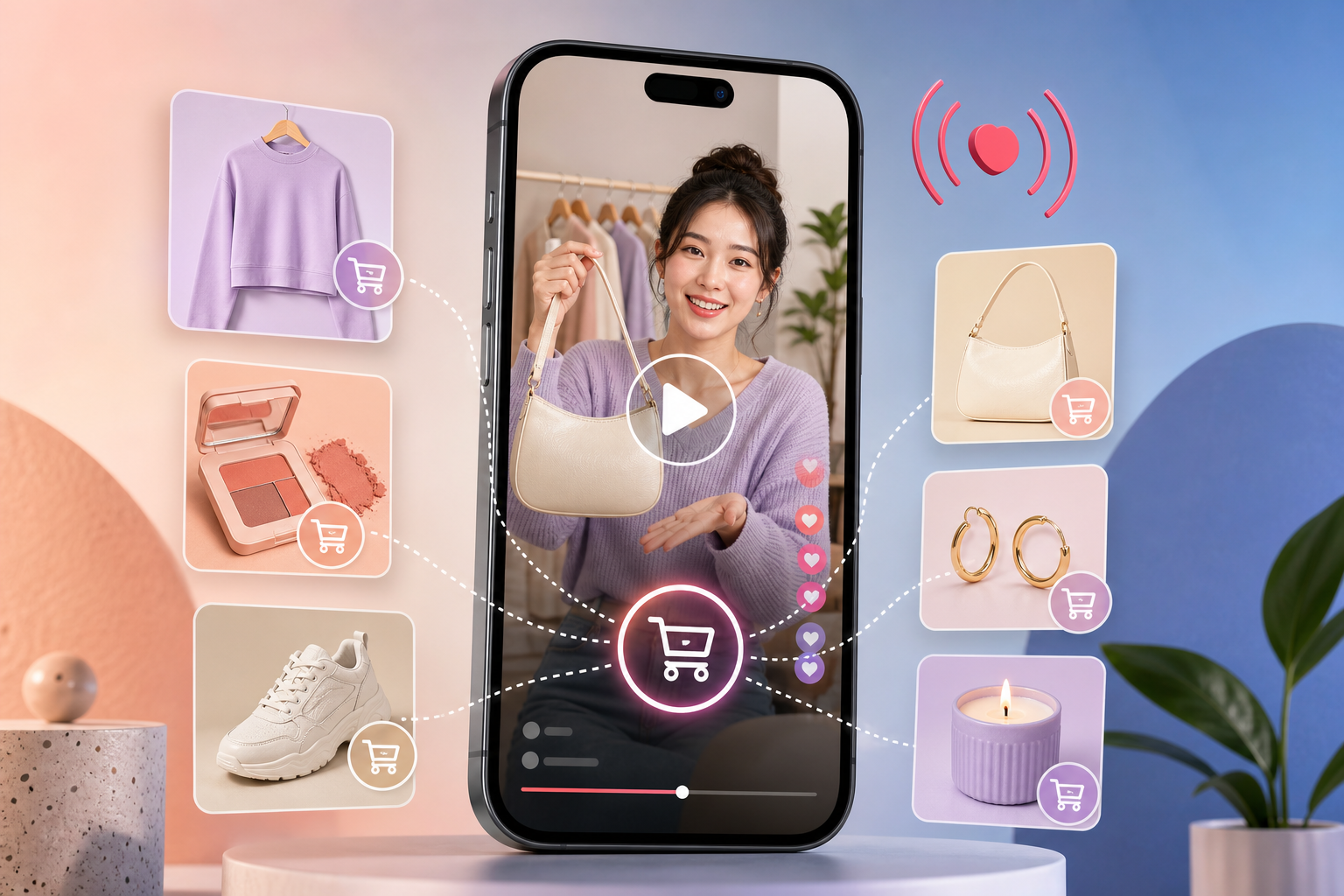
TikTok Shop is an in-app e-commerce feature that lets brands list products, run promotions, and complete transactions entirely within TikTok. There is no redirect to an external website, no break in the browsing experience. A viewer watches a short video or a livestream, taps a product tag, and checks out without ever leaving the app. That frictionless path from discovery to purchase is what separates TikTok Shop from conventional social media advertising, where the click-to-buy journey involves multiple handoffs. For brands, this means the content itself is the storefront. Understanding that distinction is the starting point for building a strategy that actually converts, rather than one that simply generates views.
Account setup and verification come first
To sell on TikTok Shop, a brand must first create or connect a TikTok Business account, then apply through the TikTok Shop Seller Center. The application requires identity and business verification, which typically means submitting company registration documents and relevant identification. TikTok reviews these before granting access to the Seller Center's full suite of tools: product listing, inventory management, order tracking, and the affiliate creator program. The verification step is non-negotiable and can take several days, so building it into your launch timeline matters. Brands that skip proper preparation often find themselves delayed at this stage, unable to go live when a campaign window opens.
Product categories, fees, and platform rules shape your setup
Not every product category is permitted on TikTok Shop. The platform maintains a list of restricted and prohibited categories, and brands must confirm their products comply before listing. Beyond eligibility, commission and fee structures apply to every transaction: TikTok charges a platform commission on sales, and brands running the affiliate creator program pay an additional commission to the creators who drive those sales. These costs need to be factored into pricing and margin planning from the outset. TikTok's policies also govern how products can be described and promoted in video content, so reviewing the platform's advertising and content guidelines early prevents listings from being rejected or removed after launch.
Content and creators drive discovery on TikTok Shop
TikTok's algorithm is built around content engagement, not keyword search. Products get discovered because a video or livestream surfaces them to the right audience, not because a shopper typed a query. This means video-driven and livestream commerce are not optional extras on TikTok Shop; they are the primary mechanism for generating traffic to your listings. Brands can produce their own short-form video content with shoppable product links embedded, run scheduled livestreams where hosts demonstrate and sell products in real time, or activate the affiliate creator program to let independent creators promote products in exchange for a commission. Most successful TikTok Shop brands use a combination of all three. Working with KOLs and creators who already have an engaged audience in your category accelerates this process considerably.
Measuring performance and scaling what works
TikTok Shop's Seller Center provides data on views, clicks, conversions, and revenue at the product and content level. Tracking which videos and which creators are driving actual sales, not just impressions, is what separates a repeatable growth engine from a one-off campaign. Attribution is cleaner on TikTok Shop than on most social channels because the entire purchase happens in-app, so the link between a piece of content and a completed order is direct. Use that data to identify your highest-converting content formats, double down on the creator types that perform, and adjust commission rates in the affiliate program to attract more of the right partners. Brands that treat TikTok Shop as an always-on channel rather than a campaign burst tend to build compounding momentum over time. For brands also considering Shopee livestream commerce as a complementary channel, the measurement principles are similar but the platform mechanics differ.
The brands that succeed on TikTok Shop treat every video as a storefront, not just a piece of content.
How to get started on TikTok Shop
-
Create a TikTok Business account
If your brand does not already have a TikTok Business account, create one using your business email. A Business account unlocks the analytics, advertising tools, and Seller Center access that a personal account does not provide. This account becomes the foundation for everything else, so use a login that your team can access and manage long-term, not a personal email.
-
Apply through TikTok Shop Seller Center
Navigate to the TikTok Shop Seller Center and submit your application. You will be asked to select your seller type (individual or corporate) and your market. For brands, the corporate seller path is the appropriate route. Complete every field accurately, as incomplete applications are a common cause of delays.
-
Complete identity and business verification
TikTok requires documentary proof of your business registration and, in most markets, identity verification for the account holder. Upload clear, current documents and allow several business days for review. Verification is a gate, not a formality: your Seller Center tools are locked until this step is approved, so submit documents as early as possible.
-
Check category eligibility and set up product listings
Before listing, confirm your product categories are permitted on TikTok Shop. Once confirmed, create your product listings with clear titles, detailed descriptions, and high-quality images or video. Product listings that include short demonstration videos consistently outperform image-only listings because they match the content-first behaviour of TikTok's user base.
-
Activate the affiliate creator program
TikTok Shop's affiliate program lets creators browse your product catalogue, apply to promote items, and earn a commission on sales they generate. Set your commission rates, add products to the affiliate marketplace, and begin approving creator applications. This is one of the fastest ways to generate content volume without producing everything in-house. Consider working with a KOL marketing partner to identify and recruit creators who are a strong fit for your category.
-
Plan your content and livestream schedule
A product listing without content behind it will not surface in TikTok's feed. Build a content calendar that combines short-form shoppable videos with scheduled livestreams, using each format to serve a different part of the buyer journey: short videos for discovery, livestreams for deeper engagement and real-time purchase decisions. If producing this content in-house is a resource constraint, UGC and short video production partners can fill the gap.
Benefits
No redirect, full purchase in-app
TikTok Shop completes the entire transaction inside the app, removing the drop-off risk that comes with redirecting shoppers to an external website. Fewer handoffs in the purchase journey means higher conversion rates compared to standard social media advertising.
Content drives product discovery
Because TikTok's algorithm surfaces content based on engagement rather than search intent, a well-produced short video or livestream can reach a large, relevant audience without paid amplification. Product discovery happens through entertainment, which lowers the barrier for brands with strong content.
Affiliate program scales content volume
The built-in affiliate creator program lets brands recruit independent creators who promote products in exchange for a commission on sales. Brands pay for results rather than impressions, making the cost structure more predictable than traditional influencer campaigns.
Clean in-app attribution
Because the purchase completes within TikTok, the link between a specific piece of content and a completed sale is direct and measurable. Attribution is clearer than on most social channels, where the buyer journey crosses multiple platforms before a transaction.
Livestream commerce creates real-time conversion
Scheduled livestreams allow brands to demonstrate products, answer questions, and offer promotions to a live audience. The interactive format consistently drives higher conversion rates than passive content because viewers can ask questions and decide in the moment.
TikTok Shop in practice: brand scenarios
A beauty brand launching a new product line
A skincare brand entering TikTok Shop activates the affiliate creator program alongside its own content, recruiting beauty creators to produce honest review videos with embedded product links. Because the purchase happens in-app, the brand can directly attribute sales to each creator's content rather than relying on discount codes or UTM tracking. The affiliate commission model means the brand pays for performance, not reach, which keeps acquisition costs tied to actual revenue. This approach also generates a library of creator-made content that can be repurposed across other channels.
An overseas brand entering the Singapore market
A brand from China looking to establish itself in Singapore uses TikTok Shop as its primary retail entry point, pairing the Seller Center setup with a localised content strategy. Rather than translating existing Chinese-market content directly, the brand works with Singapore-based creators who understand local purchasing behaviour and platform norms. Localisation at the content level, not just the language level, is what drives conversion in a new market. Services like local market entry support can accelerate this process for brands unfamiliar with the Singapore platform landscape.
A health supplement brand running regular livestreams
A health and wellness brand schedules weekly TikTok Shop livestreams where a host demonstrates products, answers viewer questions in real time, and offers time-limited bundle promotions visible only to live viewers. Livestream commerce creates urgency and interactivity that a static product listing cannot replicate. The brand tracks conversion rates per session and iterates on host format, timing, and product mix based on what the Seller Center data shows. Over several months, the livestream channel becomes its highest-converting touchpoint.
A lifestyle brand building always-on creator content
Rather than running one-off influencer campaigns, a lifestyle accessories brand builds an ongoing roster of TikTok creators who regularly feature its products through the affiliate program. New products are seeded to the roster before launch, generating a wave of organic-feeling content on release day. Consistent creator activity keeps the brand's products surfacing in TikTok's algorithm across different audience segments, compounding reach over time rather than spiking and fading. This model mirrors the always-on influencer marketing approach that performs consistently across social commerce channels.
Common questions about selling on TikTok Shop
What documents do I need to verify my TikTok Shop seller account?
TikTok requires business registration documents and identity verification for the account holder. For corporate sellers, this typically means your company registration certificate and relevant identification. Submitting complete, current documents from the start is the most reliable way to avoid delays, as incomplete submissions are a common cause of extended review times.
Can any product be sold on TikTok Shop?
No. TikTok maintains a list of restricted and prohibited product categories, and brands must confirm their products comply before listing. Category eligibility should be checked before you invest time in setting up listings, as products in restricted categories will be removed and may affect your seller standing.
Do I need to produce my own videos to sell on TikTok Shop?
Not necessarily. TikTok Shop's affiliate creator program lets independent creators produce content featuring your products in exchange for a sales commission. However, brands that combine their own content with creator-produced content tend to generate more consistent traffic to their listings, because they are not entirely dependent on affiliate activity.
How does TikTok Shop's affiliate program work for brands?
Brands add products to the TikTok Shop affiliate marketplace and set a commission rate. Creators browse the marketplace, apply to promote products they find relevant, and earn the stated commission on every sale their content generates. The brand only pays commission on completed sales, not on views or clicks, which ties creator costs directly to revenue outcomes.
Is TikTok Shop suitable for brands new to social commerce?
It can be, but brands new to social commerce should expect a learning curve around content production and platform-specific norms. TikTok Shop rewards content that feels native to the platform, not repurposed advertising. Starting with the affiliate creator program while building internal content capability is a practical approach for brands at the beginning of their social commerce journey. You may also want to explore how KOLs drive sales as part of a broader platform strategy.
Ready to turn your TikTok Shop into a real sales channel
TikTok Shop rewards brands that combine the right setup with the right content strategy. If you are ready to move beyond account creation and build a channel that consistently converts, Confetti's team of TikTok Shop specialists can help you get there, from creator recruitment to livestream production.