
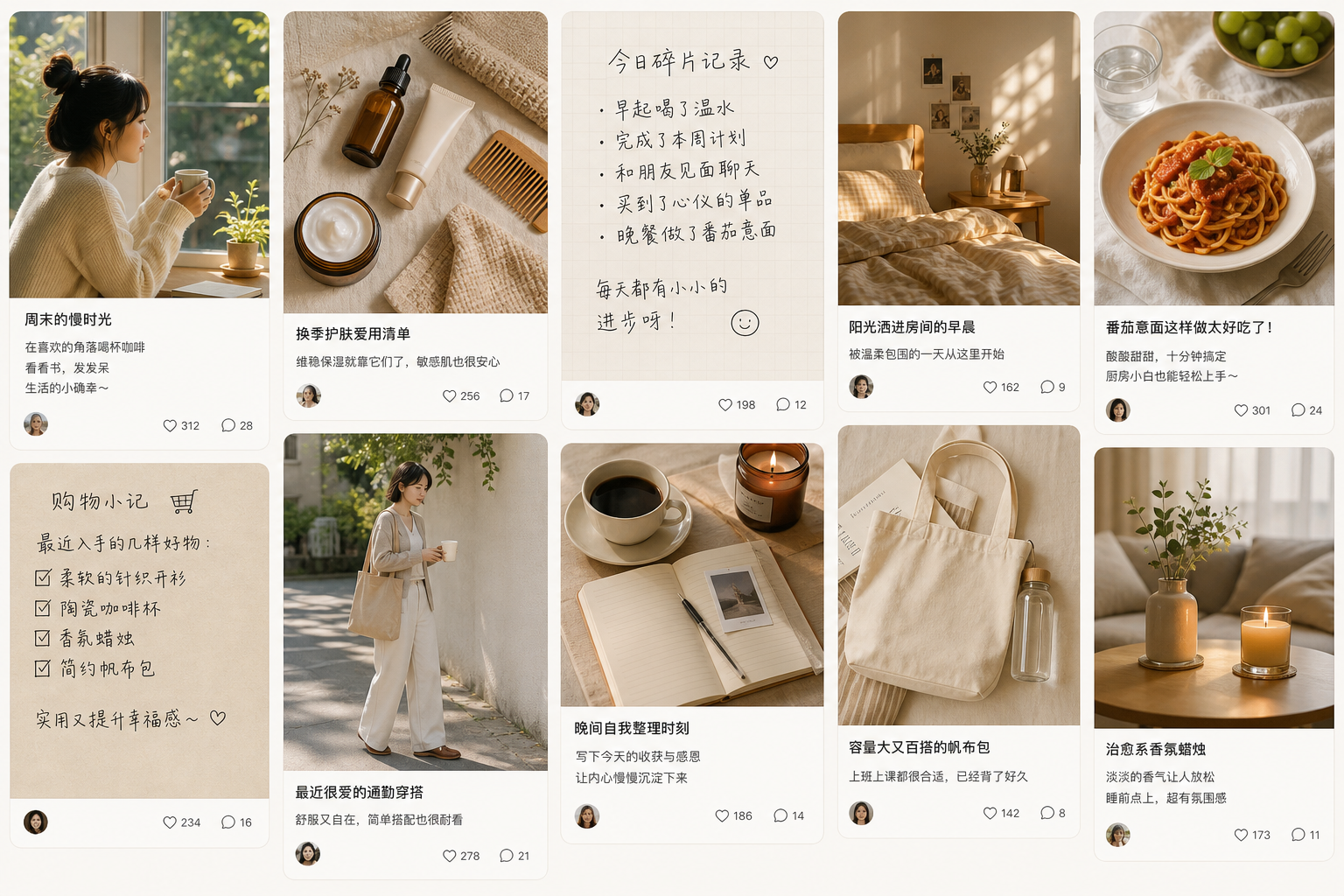
A practical guide to Little Red Book marketing: content, creators, and the platform logic brands need to understand.
Start building your Little Red Book presence
Build a Xiaohongshu strategy grounded in how the platform actually drives discovery and purchase decisions.
Why Xiaohongshu operates by different rules
Xiaohongshu, widely known as Little Red Book, is not simply another social media platform. It sits at the intersection of community content, product discovery, and e-commerce, and the way users move through it reflects that hybrid nature. People arrive on the platform actively searching for recommendations, not passively scrolling past ads. That search-driven discovery model means a post optimized with the right keywords can surface to a highly motivated buyer days, weeks, or even months after it was published. For brands accustomed to Western platforms where reach decays quickly, this is a meaningful difference. Understanding it is the starting point for any effective Xiaohongshu strategy. For a deeper look at how the platform is structured, see what Xiaohongshu is and how brands use it to drive sales.
The audience shaping every content decision
Xiaohongshu's user base skews young, female, and urban. These are consumers who are research-oriented and skeptical of overt advertising. They trust peer recommendations and detailed personal reviews far more than brand-produced content. This shapes everything: the tone of successful posts, the type of creators brands should work with, and the visual language that earns engagement. Authenticity is not a stylistic choice on this platform; it is a functional requirement. Content that reads as promotional without feeling genuine tends to underperform, while posts that mirror the honest, detail-rich style of organic user content consistently drive higher engagement and conversion. Brands entering the platform need to internalize this before making any content or creator decisions.
KOCs and KOLs: choosing the right creator mix
Two creator categories matter most on Xiaohongshu. KOLs (Key Opinion Leaders) are high-follower accounts with broad reach, useful for building awareness and lending credibility to a brand. KOCs, or Key Opinion Consumers, are everyday users with smaller but highly engaged audiences whose recommendations carry significant trust precisely because they feel unsponsored. The most effective Xiaohongshu campaigns typically combine both, using KOLs to establish presence and KOCs to generate the volume of authentic-feeling posts that populate search results and reinforce purchase decisions. Relying solely on large influencers without the supporting layer of KOC content often leaves a brand visible but not trusted.
Content that earns reach on the platform
Xiaohongshu posts live or die by three elements: the title, the imagery, and the narrative. Keyword-optimized titles are essential because they determine whether a post appears in search results for the terms your target buyers are actually using. High-quality, well-lit imagery signals credibility and stops the scroll. And the body of the post needs to tell a genuine product story, covering real use cases, honest observations, and specific details that a real user would notice. Writing in Chinese is not optional for reaching the platform's core audience; content in Mandarin that uses natural, conversational phrasing consistently outperforms translated or stilted copy. Brands producing UGC-style content for other platforms will find some of those instincts transfer, but Xiaohongshu's format rewards even more specificity and depth.
Measuring what Xiaohongshu activity actually produces
Because Xiaohongshu content has a long discovery tail, measurement requires patience and the right metrics. Engagement rate, save rate (which signals genuine purchase intent), and search ranking for target keywords are more meaningful indicators than raw view counts. Brands should also track how Xiaohongshu activity influences sales on linked e-commerce channels, since many users research on the platform and purchase elsewhere. Save rate in particular is a strong proxy for conversion intent, as users typically save posts they plan to act on. Building a reporting framework that connects content performance to downstream sales, rather than treating Xiaohongshu as a standalone awareness channel, gives a much clearer picture of return on investment. KOL campaign management approaches that emphasize ROI measurement apply directly here.
On Xiaohongshu, a single well-placed post from a trusted community voice can do more for a product launch than a polished advertising campaign.
How to build a Xiaohongshu marketing strategy
-
Map the platform's search landscape
Before creating any content, research the keywords your target audience is actually using on Xiaohongshu. Search your product category directly on the platform and study which posts rank highly, what titles they use, and what content formats dominate. This tells you both the language your buyers speak and the bar your content needs to clear. Keyword research on Xiaohongshu is the foundation, not an afterthought.
-
Define your creator tier strategy
Decide how you will balance KOLs and KOCs based on your goals. If you are launching a new product, a KOL post can establish initial credibility and awareness. A sustained layer of KOC content then builds the search presence and peer-recommendation volume that drives ongoing discovery. For brands new to influencer marketing on this platform, starting with a small KOC seeding campaign is often a practical way to test content angles before committing to larger KOL partnerships.
-
Produce content that matches platform norms
Brief your creators, or your own content team, to write in natural, conversational Mandarin with specific product details rather than marketing language. Titles should front-load the most searchable keyword. Images should be clean, well-lit, and styled to match the aesthetic of organic posts in your category. Native-feeling content consistently outperforms content that looks like an ad, even when the post is clearly a partnership.
-
Seed content at volume, then optimize
A single post rarely moves the needle on Xiaohongshu. The platform rewards brands that build a body of content across multiple creators, covering different use cases, angles, and keywords. Publish a batch of posts, monitor which titles and formats generate the highest save rates and search impressions, then brief subsequent creators to double down on what is working. This iterative approach is how brands build durable search presence rather than a one-time spike.
-
Connect content performance to sales outcomes
Set up tracking that links Xiaohongshu activity to actual purchase behavior, whether through platform-native e-commerce features, unique discount codes (where appropriate), or traffic analysis on linked product pages. Review save rates, comment sentiment, and keyword rankings alongside sales data. Treating Xiaohongshu as a performance channel, rather than a brand-awareness exercise, keeps the strategy accountable and improvable over time.
Benefits
Search-driven discovery that compounds
Unlike social feeds where content decays quickly, Xiaohongshu posts continue surfacing in search results long after publication, giving brands durable visibility that grows with each new piece of content added.
Peer trust that advertising cannot replicate
KOC content carries the credibility of a genuine user recommendation. Community trust on Xiaohongshu translates directly into purchase intent, particularly for categories like beauty, health, and lifestyle where personal experience matters.
A highly purchase-ready audience
Users on Xiaohongshu are actively researching products, not passively browsing. High save rates signal genuine intent to buy, making the platform's engaged audience more commercially valuable than raw follower counts suggest.
Content that informs the broader strategy
The posts and angles that perform well on Xiaohongshu reveal what your audience actually cares about. Insights from top-performing content can sharpen messaging across other channels, from product pages to short video scripts.
Xiaohongshu marketing in practice
A beauty brand entering the Chinese-speaking market
A skincare brand with no existing presence on Xiaohongshu commissions a mix of KOC seeding posts and a smaller number of KOL reviews ahead of a product launch. The KOC posts cover specific skin concerns the product addresses, written in the first-person review style native to the platform. Within weeks, the brand's product name begins appearing in search results for relevant skin-concern keywords. The combination of volume from KOCs and credibility from KOLs creates a search footprint that a single large influencer post could not replicate alone.
An overseas brand using Xiaohongshu for Singapore market entry
A brand from China looking to reach Chinese-speaking consumers in Singapore uses Xiaohongshu as part of its local expansion strategy, since the platform has a meaningful user base among this demographic regionally. Content is produced in Mandarin and tailored to local lifestyle contexts, such as referencing local shopping habits or seasonal relevance. This approach lets the brand leverage an existing platform behavior, where users trust Xiaohongshu recommendations, rather than building trust from scratch on an unfamiliar channel. For brands navigating this kind of cross-market entry, social media marketing agency services that understand both the platform and the local audience are particularly valuable.
A lifestyle product brand building long-term search presence
Rather than running a single campaign, a lifestyle accessories brand treats Xiaohongshu as an ongoing content channel. Every month, a new set of KOC posts covers different use cases, styling ideas, and user scenarios. Over time, the brand's products appear across a wide range of search queries, not just branded searches. This compounding effect of consistent content seeding means the brand benefits from discovery by users who were not specifically looking for it, but found it while researching a related topic.
A health supplement brand using detailed review content
Health and wellness products perform well on Xiaohongshu when the content is specific and honest. A supplement brand briefs KOCs to document their genuine experience over a period of use, including what they noticed, how they incorporated the product into their routine, and any questions they had. This format, which mirrors how organic users already discuss health products on the platform, generates high save rates because readers find it genuinely useful. Specificity and honesty are the content attributes that separate high-performing health posts from generic promotional ones.
Common questions about Xiaohongshu marketing
Do brands need to write content in Chinese to succeed on Xiaohongshu?
Yes, for reaching the platform's core audience, Mandarin content written in a natural, conversational tone is essential. The platform's user base expects content that reads like a genuine peer recommendation, and translated or stilted copy tends to underperform. Brands should work with native-speaking creators or copywriters who understand the platform's voice.
What is the difference between a KOL and a KOC on Xiaohongshu?
A KOL (Key Opinion Leader) is a high-follower creator whose reach and credibility can establish brand awareness quickly. A KOC (Key Opinion Consumer) is an everyday user with a smaller but highly engaged audience whose posts feel more like honest peer reviews. Effective Xiaohongshu strategies typically use both: KOLs for visibility and KOCs for the volume of authentic content that builds search presence and sustained trust. You can read more about how KOLs work and why they matter for brands.
How is Xiaohongshu different from Instagram or other visual platforms?
The most significant difference is the search-driven discovery model. On Xiaohongshu, users actively search for product recommendations using specific keywords, so a well-optimized post can surface to motivated buyers long after it was published. Instagram's algorithm prioritizes recency and social graph; Xiaohongshu's surfaces content based on relevance to what a user is actively looking for, which changes how brands should approach content creation and keyword strategy.
Can Xiaohongshu marketing work for brands outside China?
Yes. Xiaohongshu has a meaningful user base among Chinese-speaking communities in Southeast Asia, including Singapore, making it a relevant channel for brands targeting this demographic regionally. Overseas brands entering markets like Singapore can use Xiaohongshu as part of a local expansion strategy, particularly when their product category, such as beauty, health, or lifestyle, aligns with what the platform's audience actively researches. See also what Xiaohongshu is and how brands can use it for social commerce.
Ready to build a Xiaohongshu strategy that converts
Xiaohongshu rewards brands that understand its content logic and creator ecosystem before they start spending. If you are planning a campaign on Little Red Book, or exploring how it fits into a broader social commerce strategy in Singapore, our team can help you build an approach grounded in how the platform actually works.