Understand the real cost factors behind influencer marketing so your brand can plan spend with confidence.
Plan your KOL campaign budget with clarity
Map the cost drivers behind your next KOL campaign before you commit a single dollar to the brief.
Why influencer marketing costs vary so widely
There is no single rate card for influencer marketing. A brand running a campaign in Singapore might receive quotes that differ by an order of magnitude depending on the creator, platform, and deliverables involved. This is not a market inefficiency; it reflects the genuine complexity of what is being purchased. When a brand works with a KOL or influencer, it is buying a combination of reach, trust, creative labour, and audience attention, and each of those elements is priced differently depending on who is delivering it and where. Understanding the individual cost drivers is the only reliable way to build a budget that is grounded in reality rather than guesswork.
Creator tier is the single biggest cost lever
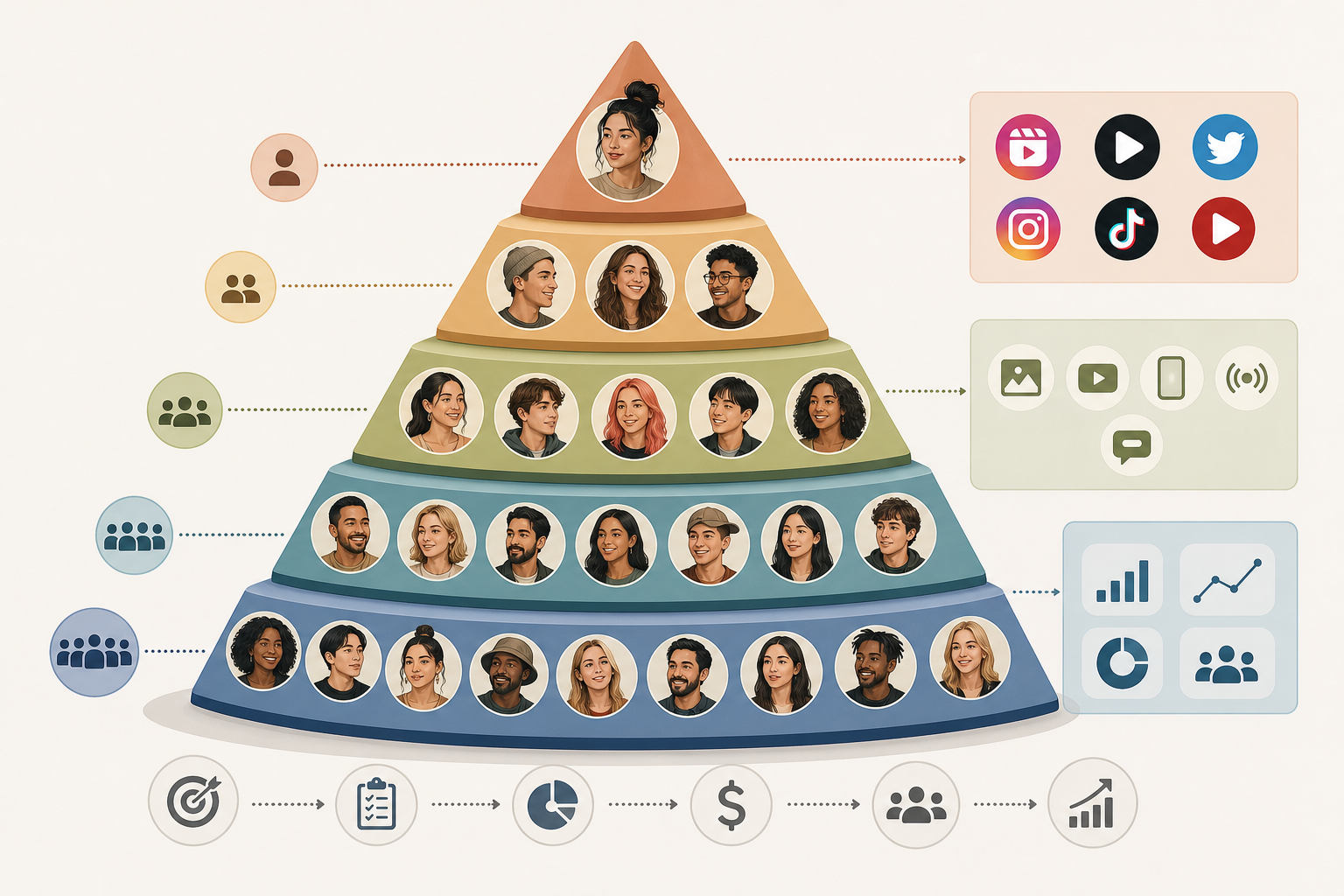
The most consequential variable in any KOL campaign budget is the tier of creator you engage. Creators are typically grouped into four tiers: nano, micro, macro, and mega (or celebrity). Each tier represents a different balance between reach, engagement rate, and cost. Nano and micro creators tend to command lower fees and often deliver higher engagement rates relative to their audience size, making them efficient for niche targeting or always-on programmes. Macro and mega creators offer scale and brand visibility, but the fee premium is significant. Most brands running campaigns in Singapore and Southeast Asia work across multiple tiers simultaneously, using larger creators for awareness and smaller ones for conversion. You can read more about how KOLs drive sales across these tiers.
Platform, format, and market shape the rate further
Beyond creator tier, the platform a campaign runs on has a direct effect on cost. TikTok, Instagram, YouTube, and Lemon8 each have their own creator economies, audience demographics, and content production demands. Short-form video typically requires more production effort than a static post, which is reflected in creator fees. Livestream commerce on platforms such as TikTok Shop or Shopee involves additional complexity: scripting, hosting time, and real-time selling skills all factor into what a creator charges. Market also matters. Singapore rates differ from those in other Southeast Asian markets because of differences in purchasing power, creator supply, and campaign expectations. If your brand is entering Singapore from overseas, these market-specific dynamics are worth understanding early. Learn more about selling through TikTok Shop or Shopee livestream campaigns.
Usage rights, exclusivity, and deliverable scope add cost layers
Many brands underestimate how much the contractual terms around a campaign affect its total cost. Usage rights determine where and for how long a brand can use a creator's content after it is published. Repurposing a creator's video as a paid ad, for example, typically requires a separate usage rights agreement and a corresponding fee. Exclusivity clauses, which prevent a creator from working with competing brands during a set period, also carry a premium. The number of deliverables, revision rounds, and approval stages all add to the overall scope. A campaign that looks simple on a brief can become considerably more complex, and more expensive, once these terms are negotiated. UGC-style content without exclusivity or paid media rights is often a more efficient entry point for brands testing creator content for the first time.
How to think about ROI when setting your budget
Cost without context is not a useful planning input. The more useful question is what a given level of spend is expected to return, and how you will measure it. Performance-driven campaigns tie creator activity to measurable outcomes such as clicks, conversions, or revenue generated through affiliate links or platform storefronts. This is distinct from awareness-only campaigns, where the return is harder to quantify. When budgeting, brands should define their primary objective first, whether that is reach, engagement, or direct sales, and then size the budget to the activity most likely to deliver it. An influencer marketing agency can help translate objectives into a creator mix and deliverable set that fits a realistic spend range, rather than starting from a rate card and working backwards.
What drives the cost of a KOL campaign
The brands that get the most from influencer marketing are not always the ones that spend the most; they are the ones that match spend to strategy from the start.
How to build a KOL campaign budget step by step
-
Define your campaign objective first
Before any creator is selected or any quote is requested, the campaign objective needs to be clear. Awareness, engagement, and conversion campaigns have different cost structures because they require different creator tiers, content formats, and measurement approaches. A brand trying to drive direct sales on TikTok Shop will budget differently from one running a product launch for reach. Locking in the objective first prevents the budget from being shaped by whoever quotes first rather than by what the campaign actually needs.
-
Map your creator tier mix to the objective
Once the objective is set, decide which creator tiers will deliver it most efficiently. Most campaigns benefit from a tiered creator mix rather than a single large creator: a macro creator for initial reach, supported by micro or nano creators for engagement and conversion. Each tier has a different cost profile, so the mix directly determines the budget envelope. Consider what separates KOLs from influencers when deciding which type of creator authority your campaign needs.
-
Specify platform and content format
Platform choice is a cost input, not just a distribution decision. Short-form video on TikTok requires different production effort than a static Instagram post or a Lemon8 article. Livestream commerce on TikTok Shop or Shopee involves hosting time and selling expertise that are priced separately from standard content creation. Specifying format early prevents scope creep and gives you a more accurate basis for comparing creator quotes.
-
Negotiate usage rights and exclusivity terms
Agree on usage rights and exclusivity before finalising any creator fee. If you plan to run the creator's content as a paid ad, budget for the additional usage rights cost. If you need category exclusivity, factor in the premium. Leaving these terms until after a creator is engaged almost always increases the total cost because the leverage shifts once the relationship has started. A KOL marketing agency can help structure these terms efficiently across a roster of creators.
-
Build in a measurement and optimisation budget
The budget for a KOL campaign should not end at creator fees. Tracking tools, affiliate link setup, and post-campaign analysis all have associated costs, and skipping them means you cannot assess whether the spend was justified. Allocating a portion of the total budget to measurement from the outset makes it possible to optimise future campaigns based on actual performance data rather than impressions alone. This is especially important for brands running always-on programmes where learning compounds over time.
Benefits
Avoid underbudgeting on creator fees
Understanding tier-based pricing before you brief means your budget reflects what creators in your target market actually charge, rather than what you hoped they would charge. Underbudgeting at the brief stage is one of the most common reasons KOL campaigns underdeliver.
Match spend to measurable outcomes
Performance-driven campaigns tie creator activity to trackable results such as conversions or affiliate revenue. Budgeting with measurement in mind from the start means you can assess whether the spend was justified and optimise the next campaign accordingly.
Reduce scope creep through upfront clarity
Usage rights, exclusivity, and revision rounds all add cost when left unspecified. Agreeing on contractual terms before signing a creator prevents the total campaign cost from expanding well beyond the original quote.
Get more from a tiered creator mix
Spreading budget across multiple creator tiers, rather than concentrating it on one large creator, generates more content assets and reduces the risk that a single creator's performance determines the entire campaign outcome. A diversified creator mix typically delivers better coverage across awareness and conversion goals.
How different brands approach KOL campaign budgets
Beauty brand entering Singapore from overseas
An overseas beauty brand entering the Singapore market faces a layered cost challenge: it needs to build local brand recognition while also driving early sales through social commerce channels. The typical approach is to allocate a larger share of the initial budget to micro and nano creators who have credible, niche audiences in beauty and skincare, rather than spending the entire budget on a single macro creator. This spreads risk and generates more content assets. As the brand establishes itself, the creator mix can shift toward larger names. Brands in this position can also explore local market entry support to understand Singapore-specific creator rates and platform dynamics.
Health supplement brand running an always-on programme
A health supplement brand that runs creator content continuously rather than in one-off bursts faces a different budgeting challenge. The cost per piece of content may be lower when working with a stable roster of creators over time, but the total programme cost accumulates across months, so monthly budget discipline matters more than individual campaign economics. Always-on programmes also require investment in performance tracking to identify which creators and formats are driving conversions versus just generating views. Influencer marketing agency services that include roster management and performance reporting can reduce the operational overhead of running this kind of programme.
E-commerce brand testing livestream commerce for the first time
A brand considering its first shoppable livestream on TikTok Shop or Shopee should budget for more than just the host's fee. Studio setup, scripting, and technical production are all cost inputs that brands unfamiliar with livestream commerce often overlook. The host's ability to sell in real time, not just present, is a skill that commands a premium over standard content creation. Starting with a smaller, well-produced live show and measuring conversion before scaling is a more budget-efficient approach than committing to a large production immediately. Read more about how TikTok Shop works for brands before setting a livestream budget.
Financial services brand seeking social commerce reach
Financial services brands face a specific cost dynamic: the pool of creators who can speak credibly and compliantly about financial products is smaller than in categories like beauty or lifestyle. A smaller creator supply in a regulated category means rates for credible KOLs tend to be higher, and usage rights become more important because the content often needs compliance review before it can be repurposed. Budgeting for longer lead times and more revision rounds is realistic in this category. Understanding how KOL influence works in trust-sensitive categories can help set appropriate expectations before briefing.
Common questions about influencer marketing costs
What factors have the biggest impact on influencer marketing costs in Singapore?
Creator tier is the single largest driver: nano and micro creators cost significantly less than macro or mega creators, though they serve different objectives. Beyond tier, platform, content format, and contractual terms such as usage rights and exclusivity all materially affect the total cost. Market context also matters: Singapore rates reflect local creator supply, audience purchasing power, and platform-specific dynamics that differ from other Southeast Asian markets.
Why do KOL rates differ so much between platforms?
Each platform has its own content format requirements and creator economy. Short-form video on TikTok demands more production effort than a static post on Instagram, and livestream commerce on TikTok Shop or Shopee adds hosting time and real-time selling skills to the cost equation. Creators who perform well on one platform do not always have the same following or command the same rate on another, so platform selection directly affects what you will pay.
What are usage rights and why do they affect the campaign budget?
Usage rights determine where and for how long a brand can use a creator's content after it is published. Repurposing a creator's video as a paid advertisement typically requires a separate usage rights agreement, and the fee for those rights is on top of the creation fee. Brands that plan to run creator content as ads should budget for usage rights from the outset rather than negotiating them after the content is already produced.
Is it better to work with one large creator or several smaller ones?
This depends on the campaign objective. A single large creator delivers concentrated reach but puts the entire campaign's performance on one relationship. A tiered mix of micro and nano creators alongside one or two larger names spreads risk, generates more content assets, and often delivers stronger engagement relative to total spend. Most performance-focused campaigns in Singapore use a blended approach. You can explore how KOLs and influencers serve different roles to inform this decision.
Should measurement and tracking be included in the campaign budget?
Yes. Tracking tools, affiliate link setup, and post-campaign performance analysis all carry costs that brands sometimes omit from their initial budget. Skipping measurement means you cannot determine which creators or formats drove results, making it impossible to improve future campaigns. For always-on programmes in particular, the learning that comes from consistent measurement is one of the most valuable long-term investments a brand can make.
Get a budget framework built around your campaign goals
If you are planning a KOL campaign in Singapore or Southeast Asia and want to understand what a realistic budget looks like for your category and objectives, Confetti's team can walk you through the cost drivers specific to your brief. Reach out to start a conversation grounded in your actual goals.