A practical guide to Instagram influencer marketing: matching the right creators to your goals and turning content into conversions.
Find the right Instagram creators for your brand
Connect with creators who match your brand objectives and audience on Instagram.
What Instagram influencer marketing actually means
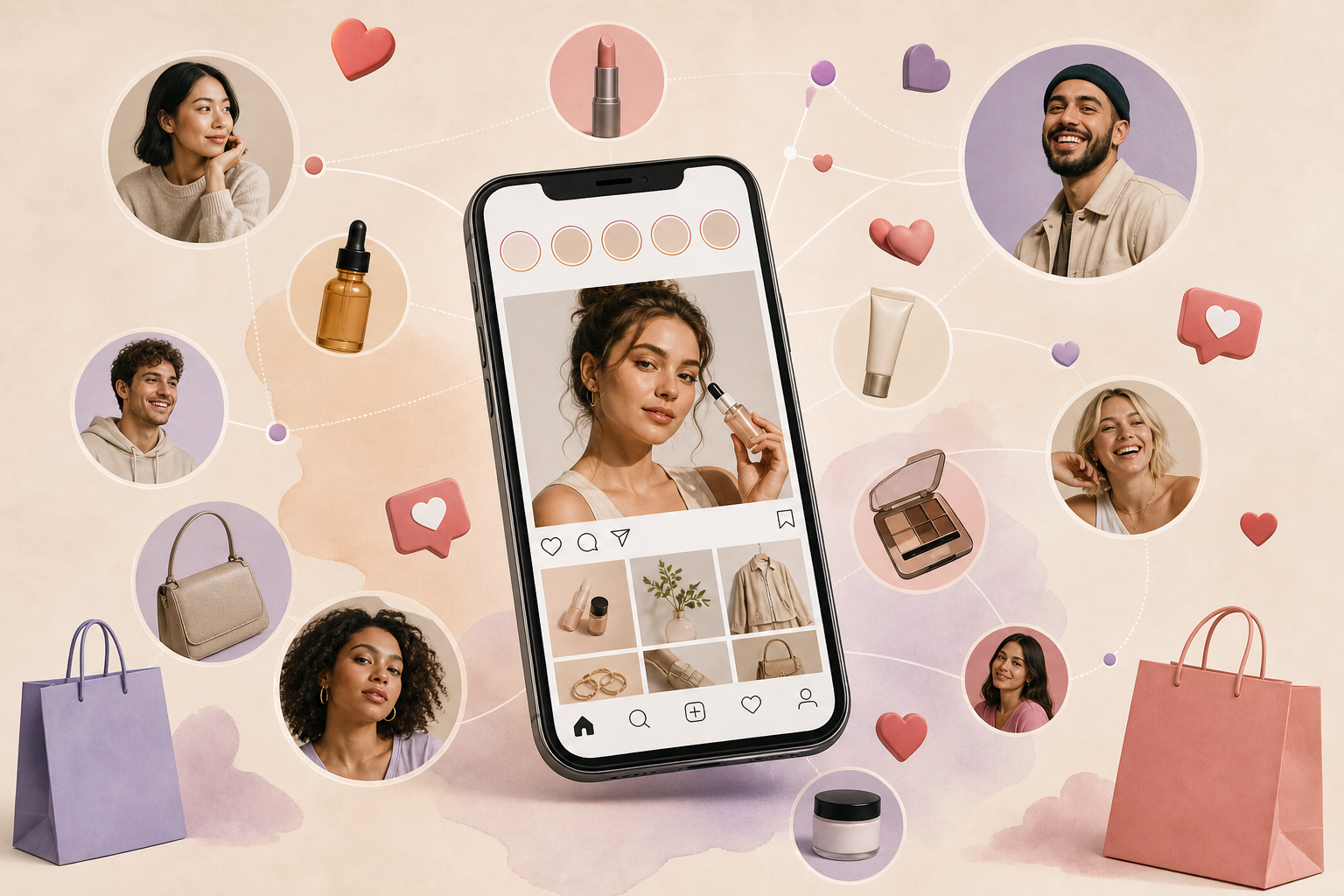
Instagram influencer marketing is the practice of brands partnering with creators who have built genuine audiences on the platform, then using those creators to promote products or services through content that feels native to the feed rather than interruptive. The core logic is straightforward: a creator's followers already trust their recommendations, so a brand mention carries more weight than a conventional ad. That trust is the asset brands are paying to access. This is distinct from simply running paid ads on Instagram. The brand is not buying inventory on a media platform; it is entering a relationship with a person whose credibility and creative voice are the actual media. Understanding that distinction shapes every decision that follows, from how you brief a creator to how you measure results. For a broader view of how creator partnerships fit into social commerce, see our influencer marketing agency services.
Creator tiers and why the size of the audience is not everything
Creators on Instagram are typically grouped into four tiers by follower count: nano creators (roughly 1K to 10K followers), micro creators (10K to 100K), macro creators, and celebrity accounts. The instinct is to equate reach with value, but the relationship is more nuanced. Nano and micro creators consistently produce higher engagement rates and speak to tighter, more defined communities. A micro creator focused on Singapore skincare, for example, reaches an audience that is genuinely interested in that category, which matters far more for conversion than raw numbers. Macro and celebrity accounts deliver scale and brand-building impact, but their audiences are broader and engagement rates are typically lower. The right tier depends entirely on what the campaign needs to accomplish. Many effective campaigns use a mix: a macro creator for awareness, supported by a layer of micro creators driving consideration and conversion. KOL marketing agency services can help brands structure that kind of tiered approach.
Setting campaign goals before choosing any creator
The most common mistake in Instagram influencer marketing is selecting creators before defining what success looks like. Brand awareness and direct conversions require fundamentally different campaign structures, and conflating them leads to campaigns that do neither well. Awareness campaigns prioritise reach, content quality, and brand association. Conversion campaigns prioritise clear calls to action, trackable links, promo codes, and creator content that moves a viewer toward a purchase decision. Once the goal is defined, every other variable, including creator tier, content format, brief, and performance metrics, follows from it. A brand launching in a new market needs awareness first; a brand with an established audience needs conversion mechanics. It is worth noting that Instagram's native tools, including affiliate links, promo codes, and the platform's own analytics, make conversion tracking more accessible than it once was. For brands considering multi-platform creator strategies, social commerce creator marketing offers a useful frame.
Negotiating rights, exclusivity, and disclosure requirements
Content rights are frequently underestimated in creator agreements. When a brand commissions an Instagram post, it does not automatically own the right to repurpose that content in paid ads, on its website, or across other platforms. Usage rights must be negotiated explicitly, and the scope (which channels, for how long) affects the fee. Exclusivity is a related consideration: if a creator is simultaneously working with a competitor, the brand's message is diluted. Exclusivity clauses are reasonable to request, particularly in categories like beauty, health, or finance where category authority matters. Disclosure is non-negotiable. Creators are required to clearly label paid partnerships, typically through Instagram's built-in paid partnership tag or an explicit caption label. Brands that ignore this risk regulatory exposure, and audiences that feel misled disengage. Transparent disclosure does not meaningfully reduce content performance; audiences understand that creators have commercial relationships. For brands producing creator content for use beyond Instagram, UGC creation services address the rights and production side in more detail.
Measuring what the campaign actually delivered
Performance measurement in Instagram influencer marketing operates at three levels: individual creator performance, content performance, and overall campaign performance. At the creator level, track engagement rate, reach, and story views relative to the creator's baseline. At the content level, track saves, shares, and link clicks, since saves in particular signal that a viewer found the content genuinely useful. At the campaign level, track conversions through affiliate links or promo codes tied to each creator, so you can attribute revenue to specific partnerships. Instagram's native analytics provide solid baseline data, but brands running conversion-focused campaigns typically layer in UTM parameters and affiliate tracking to close the attribution loop. The goal is to know which creators and which content formats drove actual purchases, not just impressions. This data also informs future creator selection, making each campaign more efficient than the last. Brands looking to apply this kind of measurement discipline across platforms should explore influencer marketing ROI measurement as a structured practice.
Smaller creators often deliver higher engagement and more targeted audiences than celebrity accounts, making tier selection the most consequential decision in any campaign.
How to run an Instagram influencer campaign step by step
-
Define the campaign goal with precision
Before any creator search begins, write down exactly what the campaign needs to achieve: brand awareness among a new demographic, traffic to a product page, or direct sales with a measurable conversion rate. The goal determines the creator tier, content format, and success metrics, so vagueness here creates problems at every subsequent stage. A single campaign can have one primary goal and one secondary goal, but trying to optimise for everything at once produces content that does nothing well.
-
Identify and vet creators by audience fit
Follower count is a starting filter, not a selection criterion. Once you have a tier in mind, vet creators by audience demographics (age, location, interests), engagement rate relative to their follower count, and content quality. Audience authenticity matters: accounts with inflated follower counts from purchased followers will show low engagement rates and deliver no real reach. Request a media kit and, where possible, ask for audience insight screenshots before committing. For brands working with key opinion leaders in specific categories, category authority is an additional filter.
-
Brief the creator with context, not a script
A creator brief should explain the brand, the product, the campaign goal, and any mandatory inclusions (product name, key claim, disclosure tag). It should not dictate every word of the caption or every frame of the video. Creators produce better-performing content when they have creative latitude, because their audience responds to their voice, not a brand's. Mandatory elements are fine; a word-for-word script defeats the purpose of working with a creator in the first place.
-
Negotiate terms covering rights, exclusivity, and timeline
Agree in writing on usage rights (which platforms, for how long), exclusivity (category or direct competitor), posting timeline, revision rounds, and payment terms. Ambiguity in usage rights is the most common source of disputes in creator agreements. If the brand intends to run the content as a paid ad (a practice sometimes called whitelisting or dark posting), this must be agreed upfront and typically commands a higher fee.
-
Track performance with the right attribution tools
Set up unique affiliate links or promo codes for each creator before the campaign launches, so conversions can be attributed accurately. Layer UTM parameters onto any links going to the brand's website. After posting, monitor engagement, story swipe-ups, link clicks, and sales attributed to each creator. Attribution at the creator level is what separates a campaign that generates insight from one that only generates content. For brands running campaigns across Instagram and other platforms simultaneously, social media marketing agency services can help coordinate tracking.
-
Analyse results and iterate creator selection
After the campaign, compare each creator's attributed performance against their fee to calculate a rough return on investment. Note which content formats (Reels, Stories, carousels) performed best and which creator profiles drove the most conversions. These findings should directly inform the next campaign's creator shortlist and brief. Brands that treat each campaign as a learning cycle build a progressively more efficient creator programme over time, rather than starting from scratch each time.
Benefits
Trust that advertising cannot replicate
Creator recommendations land differently than brand ads because they come from a voice the audience has chosen to follow. Audience trust is the core asset being accessed in any influencer partnership, and it is built by the creator over time, not by the brand.
Precise audience targeting by niche
Nano and micro creators often command highly specific communities: Singapore-based runners, local skincare enthusiasts, budget home cooks. Niche creator audiences frequently outperform broad demographic targeting for brands with a clearly defined customer profile.
Content that works beyond the original post
With the right usage rights agreement, creator content can be repurposed as paid ads, website assets, or email content. A single piece of creator content can generate value across multiple channels and extend the return on the original partnership fee.
Measurable attribution at the creator level
Affiliate links and promo codes make it possible to tie individual creator partnerships to actual sales. Attribution at the creator level transforms influencer marketing from a brand exercise into a performance channel with a calculable return on investment.
Scalable reach through creator networks
A brand working with ten micro creators reaches ten distinct communities simultaneously. Scaling through a creator network distributes the brand's message across multiple trusted voices, which is more resilient than dependence on a single large account.
Instagram influencer marketing in practice
Beauty brand launching a new product in Singapore
A beauty brand entering the Singapore market needs both awareness and early sales velocity. The brand works with a macro creator for a launch Reel to establish credibility, then activates a group of micro creators in the skincare niche to generate authentic reviews and drive traffic via promo codes. The micro layer produces the conversion data; the macro layer provides the launch moment. This tiered approach is common in beauty because the category has a dense creator ecosystem with strong community trust.
Health supplement brand running an always-on creator programme
Rather than running one-off campaigns, a health supplement brand maintains ongoing relationships with a roster of nano and micro creators who post regularly about their experience with the product. Consistency builds credibility over time in a way that a single campaign cannot. The brand tracks monthly attributed sales per creator, replacing underperformers and scaling up those who convert well. This model suits categories where purchase decisions are considered and trust-building takes multiple touchpoints. Brands interested in this approach can explore always-on influencer marketing as a structured programme.
Overseas brand entering Singapore through creator content
A brand from China looking to establish itself in Singapore uses Instagram creator partnerships to build local relevance quickly. Creators who already have the trust of Singapore consumers translate the brand's positioning into a local context, addressing local preferences and concerns in their own voice. Local creator endorsement accelerates market entry in a way that translated brand ads cannot replicate. This is particularly effective in categories like food, lifestyle, and personal care where cultural context shapes purchase decisions.
E-commerce brand repurposing creator content as paid ads
An e-commerce brand commissions Instagram Reels from a set of micro creators, negotiates extended usage rights upfront, and then runs the best-performing organic posts as paid Instagram ads. Creator-produced content consistently outperforms brand-produced creative in paid placements because it retains the authentic feel that stops a viewer from scrolling past. The brand effectively gets both organic reach from the creator's audience and scalable paid reach from the same asset. For more on this content-as-ad strategy, see UGC content creation.
Common questions about Instagram influencer marketing
What is the difference between a nano, micro, and macro creator on Instagram?
The tiers refer to follower count: nano creators have roughly 1K to 10K followers, micro creators have 10K to 100K, and macro creators exceed that. Nano and micro creators typically deliver higher engagement rates and more targeted audiences, while macro creators offer greater reach. The right tier depends on whether the campaign prioritises conversion within a niche or broad brand awareness.
Do creators have to disclose paid partnerships on Instagram?
Yes. Creators are required to clearly label sponsored content, and Instagram provides a built-in paid partnership tag for this purpose. Explicit caption labels are also acceptable. Brands that allow creators to post without disclosure risk regulatory exposure, and audiences that feel misled are less likely to convert anyway. Transparent disclosure does not meaningfully reduce content performance.
How do brands track sales from Instagram influencer campaigns?
The most reliable methods are unique affiliate links and creator-specific promo codes, which allow conversions to be attributed to individual creators. Layering UTM parameters onto outbound links adds another data point for website traffic attribution. Instagram's native analytics provide engagement and reach data, but affiliate and promo code tracking is what closes the loop to actual revenue.
What are usage rights and why do they matter in creator agreements?
Usage rights define which platforms a brand can use the creator's content on, and for how long. Without explicit agreement, a brand does not automatically have the right to repurpose a creator's Instagram post as a paid ad or on its website. Negotiating usage rights upfront, including scope and duration, prevents disputes and unlocks the ability to run creator content as paid media, which often outperforms brand-produced creative.
Is Instagram influencer marketing relevant for brands also selling on TikTok Shop or Shopee?
Yes. Many brands run creator campaigns across multiple platforms simultaneously, using Instagram for awareness and community-building while driving direct sales through platforms like TikTok Shop or Shopee. Creator content produced for Instagram can often be adapted for other platforms, and the audience insights gathered from Instagram campaigns inform creator selection elsewhere. For brands exploring shoppable formats, Shopee livestream campaigns and TikTok-native creator strategies are complementary channels.
Build an Instagram creator campaign that drives real sales
If you are planning an Instagram influencer campaign and want to match the right creators to your specific sales goals, Confetti's creator marketing team works with brands across beauty, lifestyle, health, and e-commerce to structure campaigns that convert. Reach out to discuss how a creator programme can be built around your objectives.
