Understand what an MCN does, how it connects brands to creators at scale, and what to look for before signing on.
Partner with an MCN agency that drives real sales
Connect with a creator network built around measurable brand outcomes, not just audience reach.
What an MCN company actually is
A multi-channel network (MCN) is an organisation that contracts with a group of content creators, typically across platforms like TikTok, YouTube, or Shopee, and provides them with services in exchange for a share of their revenue or a management fee. Those services typically include audience development, content programming, monetisation support, digital rights management, and access to brand deals. From the outside, an MCN looks like a talent agency. The practical difference is scope: an MCN manages many creators simultaneously, which means it can offer brands something a single talent manager cannot: coordinated, multi-creator campaigns with centralised contract handling and consistent brand safety standards. For brands exploring influencer and KOL partnerships, understanding the MCN layer is important because it shapes how campaigns are structured, priced, and measured.
How MCNs sit between creators and brands
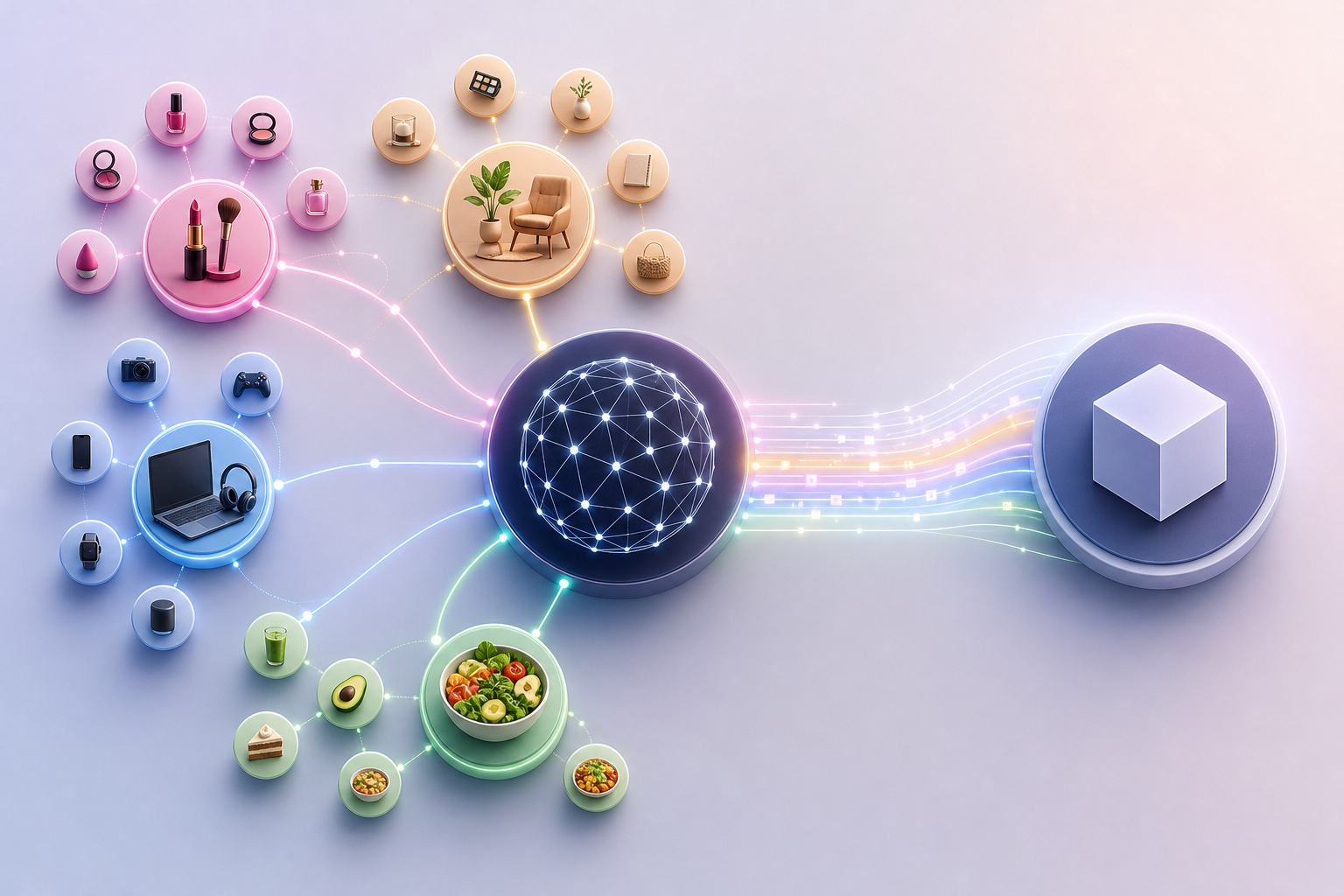
The MCN's core function is intermediation. Creators join an MCN to get support they could not easily access alone: production resources, platform relationships, sponsorship introductions, and analytics tools. Brands engage an MCN to skip the friction of finding, vetting, and contracting creators one at a time. The MCN maintains a curated roster of creators whose audience data, content categories, and performance history are already documented. When a brand brief arrives, the MCN matches it against that roster, proposes a shortlist, and manages the execution. This structure makes MCNs particularly useful for campaigns that need multiple creators posting across a short window, such as a product launch or a platform sale event. It also means the brand is, in effect, trusting the MCN's vetting standards rather than doing its own creator due diligence. That is why evaluating an MCN's creator selection criteria matters as much as evaluating its roster size.
The difference between creator-focused and brand-focused MCNs
Not all MCNs are built the same way. Some are primarily creator growth vehicles: they sign large numbers of creators, help them build audiences, and monetise through ad revenue splits. Brand deals are secondary. Others are structured around brand partnerships from the start, maintaining smaller, more carefully vetted rosters and offering brands audience data transparency, campaign reporting, and performance metrics. For brands, the distinction matters. A creator-growth MCN may have impressive follower numbers across its roster but limited infrastructure for tracking conversions or managing sponsored content at scale. A brand-focused MCN, by contrast, will typically offer clearer reporting on reach, engagement, and sales attribution. Confetti operates as a social commerce creator marketing agency and official Shopee MCN, which means its creator partnerships are oriented around measurable outcomes rather than audience accumulation alone. Understanding which type of MCN you are dealing with should be one of the first questions in any evaluation.
Key services MCNs provide to brands
Beyond creator access, MCNs typically bundle several services that reduce the operational burden on brand marketing teams. Creator matching and vetting is the most visible: the MCN filters its roster by category, audience demographics, engagement rate, and past campaign performance. Contract management is handled centrally, covering usage rights, exclusivity windows, and content approval workflows. Many MCNs also offer content production support, particularly for short video formats, and some manage KOL campaigns end to end, from brief to posting to performance reporting. On platforms like TikTok Shop and Shopee, MCN status also unlocks platform-level tools and affiliate commission structures that creators outside an MCN cannot access. For brands running Shopee livestream commerce campaigns, working through an official MCN partner can directly affect which platform features are available to the campaign.
What brands should evaluate before committing to an MCN
Three areas deserve close scrutiny. First, creator vetting process: ask how the MCN selects and retains creators, what minimum performance thresholds apply, and how often the roster is reviewed. Second, audience data transparency: a credible MCN should be able to share verified audience demographics, not just follower counts, for any creator it proposes. Third, exclusivity terms: some MCN agreements restrict creators from working with competing brands, which protects your campaign but may also limit creator availability. Separately, clarify how performance is measured. Vanity metrics like views and likes are easy to report; conversion data tied to actual purchases is harder to produce but far more useful. Brands that have already explored what KOLs are and why they matter will recognise that the same scrutiny applied to individual KOL selection applies at the MCN level, just multiplied across a roster.
An MCN's real value to a brand is not the size of its roster but the depth of data and coordination it can bring to a campaign.
How an MCN partnership works, step by step
-
Define your campaign brief and objectives
Before approaching an MCN, clarify what you need: product category, target audience, platform, campaign window, and the metric that defines success (reach, conversions, affiliate sales, or livestream GMV). A specific brief produces a better creator shortlist. MCNs match creators to briefs, so vague objectives lead to generic recommendations. If your goal is sales on TikTok Shop or Shopee rather than brand awareness, say so explicitly from the start.
-
Review the MCN's creator roster and vetting criteria
Ask the MCN for a filtered view of its roster relevant to your category. Look beyond follower counts: request engagement rates, audience demographic breakdowns, and examples of past sponsored content in your vertical. A well-run MCN will have this data readily available. If it cannot provide verified audience data for individual creators, that is a signal about the depth of its creator management. Brands considering KOL-led campaigns should apply the same scrutiny here.
-
Negotiate contract terms and exclusivity
MCN contracts cover content deliverables, posting schedules, usage rights, exclusivity windows, and revenue or fee arrangements. Exclusivity terms vary significantly between MCNs: some restrict creators from working with category competitors for the duration of the campaign, others for longer periods. Understand what you are buying and for how long. Clarify who owns the content after posting, particularly if you plan to repurpose creator videos as UGC assets in paid media.
-
Brief creators and approve content
The MCN coordinates the creative brief across its selected creators, manages the back-and-forth on content drafts, and handles the approval workflow. Your role is to provide clear brand guidelines and review content before it goes live. Resist over-scripting: creator-native content typically outperforms heavily branded scripts because audiences respond to authentic voices. The MCN should be able to advise on where brand messaging ends and creator voice begins.
-
Launch the campaign and monitor performance
Once content goes live, the MCN should provide a consolidated performance dashboard or reporting cadence. For social commerce campaigns, track platform-specific metrics: affiliate link clicks, add-to-cart rates, and completed purchases, not just video views. If the campaign includes livestream components, monitor concurrent viewers, conversion rate during the stream, and average order value. These are the metrics that connect creator activity to actual revenue.
-
Evaluate results and decide on ongoing partnership
After the campaign window closes, review performance at the creator level, the content level, and the overall campaign level. Identify which creators drove the strongest conversion, not just the most views. Use this data to inform whether to continue with the same roster, swap in new creators, or adjust the content format. Repeatable growth comes from iteration, not one-off campaigns. An MCN that supports always-on creator programmes rather than only project-based work is better suited to brands with long-term social commerce ambitions.
Benefits
Access to a vetted creator roster
Rather than sourcing creators individually, brands gain access to a pre-screened pool of creators whose audience data, content categories, and performance history are already documented, reducing the time and risk involved in creator selection.
Centralised contract and rights management
MCNs handle the contractual layer across multiple creators simultaneously, covering usage rights, exclusivity windows, and content approval workflows. This is especially valuable when coordinating campaigns across many creators within a tight timeline.
Platform-native advantages on TikTok and Shopee
Official MCN status on platforms like TikTok Shop and Shopee unlocks affiliate programme access, platform tools, and commission structures that creators outside an MCN cannot access, giving brands a structural advantage in social commerce campaigns.
Scalable multi-creator campaign coordination
An MCN can deploy multiple creators posting within a coordinated window, which is difficult to replicate through direct outreach. Coordinated posting at scale amplifies platform algorithm exposure and creates a more concentrated impact during sale events or product launches.
Performance data at the creator level
A well-run MCN provides consolidated reporting that breaks down results by individual creator, letting brands identify which creators actually drove conversions rather than relying on aggregate campaign metrics that obscure performance differences.
MCN partnerships in practice: real brand scenarios
Beauty brand launching on Shopee with affiliate creators
A beauty brand entering the Singapore market through Shopee needs to generate product awareness and drive add-to-cart behaviour simultaneously. Working through a Shopee MCN gives the brand access to creators who already have affiliate links set up on the platform and whose audiences are accustomed to shoppable content. The MCN coordinates a multi-creator posting window timed to a Shopee sale event, with each creator using a tracked affiliate link. Conversion data at the individual creator level lets the brand identify its strongest performers for future campaigns. This is a scenario where MCN infrastructure, particularly platform integration and centralised reporting, adds clear value over direct creator outreach.
Overseas brand using an MCN for Singapore market entry
A consumer goods brand from China looking to establish itself in Singapore faces the challenge of finding locally relevant creators without existing market relationships. An MCN with a vetted Singapore-based roster removes that barrier. The MCN can advise on which creator categories resonate with local audiences, handle contracts in the local context, and ensure content is culturally appropriate. Local creator credibility is often the fastest path to audience trust in a new market, and an MCN with genuine local presence is better positioned to deliver it than a brand attempting cold outreach.
Health supplement brand running a TikTok Shop campaign
A health supplement brand wants to drive purchases directly through TikTok Shop using short video content and creator affiliate links. An MCN with TikTok Shop partner status can connect the brand with creators who are already set up within the TikTok Shop affiliate programme, shortening the setup time considerably. The MCN manages posting schedules across multiple creators in a coordinated window, maximising the algorithm's exposure to fresh content. Brands that want to go deeper on TikTok's platform dynamics can explore how to build a brand presence on TikTok alongside the MCN partnership.
Mid-size brand scaling from one-off KOL posts to a creator programme
A brand that has run a handful of individual KOL collaborations wants to move toward a structured, ongoing creator programme without building an in-house influencer management team. An MCN provides the infrastructure: a managed roster, standardised briefing and approval workflows, and consolidated performance reporting across all creators. The brand shifts from campaign-by-campaign thinking to always-on creator activity, which builds more consistent platform presence and generates a library of content assets over time. For brands at this stage, understanding the difference between a one-off KOL post and a sustained programme is a useful foundation, and KOL marketing agency services can bridge that gap.
Common questions about MCN companies and how they work
What is an MCN company?
An MCN (multi-channel network) is an organisation that partners with multiple content creators across platforms like TikTok, YouTube, or Shopee. It provides creators with services such as audience development, monetisation support, and access to brand deals in exchange for a share of revenue or a management fee. For brands, an MCN acts as an intermediary that simplifies creator partnerships by offering a curated roster, centralised contracts, and campaign coordination.
How does an MCN make money?
MCNs typically earn revenue through two main mechanisms: a percentage of the ad revenue or affiliate commissions generated by creators on their roster, and fees paid by brands for campaign management and creator coordination services. The exact split varies by MCN and by the terms negotiated with individual creators.
What should a brand look for when choosing an MCN?
Three areas matter most: the MCN's creator vetting process (how creators are selected and what performance standards apply), audience data transparency (whether the MCN can provide verified demographic data for individual creators, not just aggregate follower counts), and exclusivity terms (what restrictions apply to creators during and after a campaign). Brands should also clarify how performance is measured and whether the MCN can report on conversions, not just reach.
Is an MCN the same as a talent agency?
They overlap but are not identical. A talent agency typically represents individual creators or celebrities and focuses on deal negotiation. An MCN manages a large roster of creators simultaneously and often provides operational infrastructure: production support, platform tools, analytics, and brand campaign coordination. MCNs are also more likely to have formal platform partnerships (such as with TikTok Shop or Shopee) that unlock specific features for both creators and brands.
How does Confetti's MCN work for brands on Shopee and TikTok?
Confetti operates as an official Shopee MCN and TikTok Shop Partner, which means its creator roster is integrated into the affiliate and commerce infrastructure of both platforms. Brands working with Confetti can access creator-led campaigns tied directly to shoppable links and platform sale events, with performance reporting focused on conversions and revenue rather than vanity metrics. This positions the MCN function within a broader social commerce strategy rather than as a standalone influencer service.
Ready to connect your brand with a performance-driven creator network
If you are evaluating MCN partners for a TikTok Shop or Shopee campaign, the right starting point is understanding how a network's creator roster, platform integrations, and reporting capabilities align with your sales goals. Confetti works with brands as an official Shopee MCN and TikTok Shop Partner, connecting creator activity directly to measurable commerce outcomes. Reach out to discuss what a creator network partnership could look like for your brand.