Learn how to match the right creators to your products, track real sales outcomes, and build campaigns that go beyond reach.
Turn creator content into trackable e-commerce revenue
Connect with creators who drive measurable sales for your e-commerce brand.
What makes e-commerce influencer marketing different
General influencer marketing measures success by impressions, reach, and brand sentiment. E-commerce influencer marketing adds a harder requirement: the content must move product. That means every campaign element, from creator selection to the type of content produced, is evaluated against conversion outcomes such as clicks to product pages, add-to-cart events, and completed purchases.
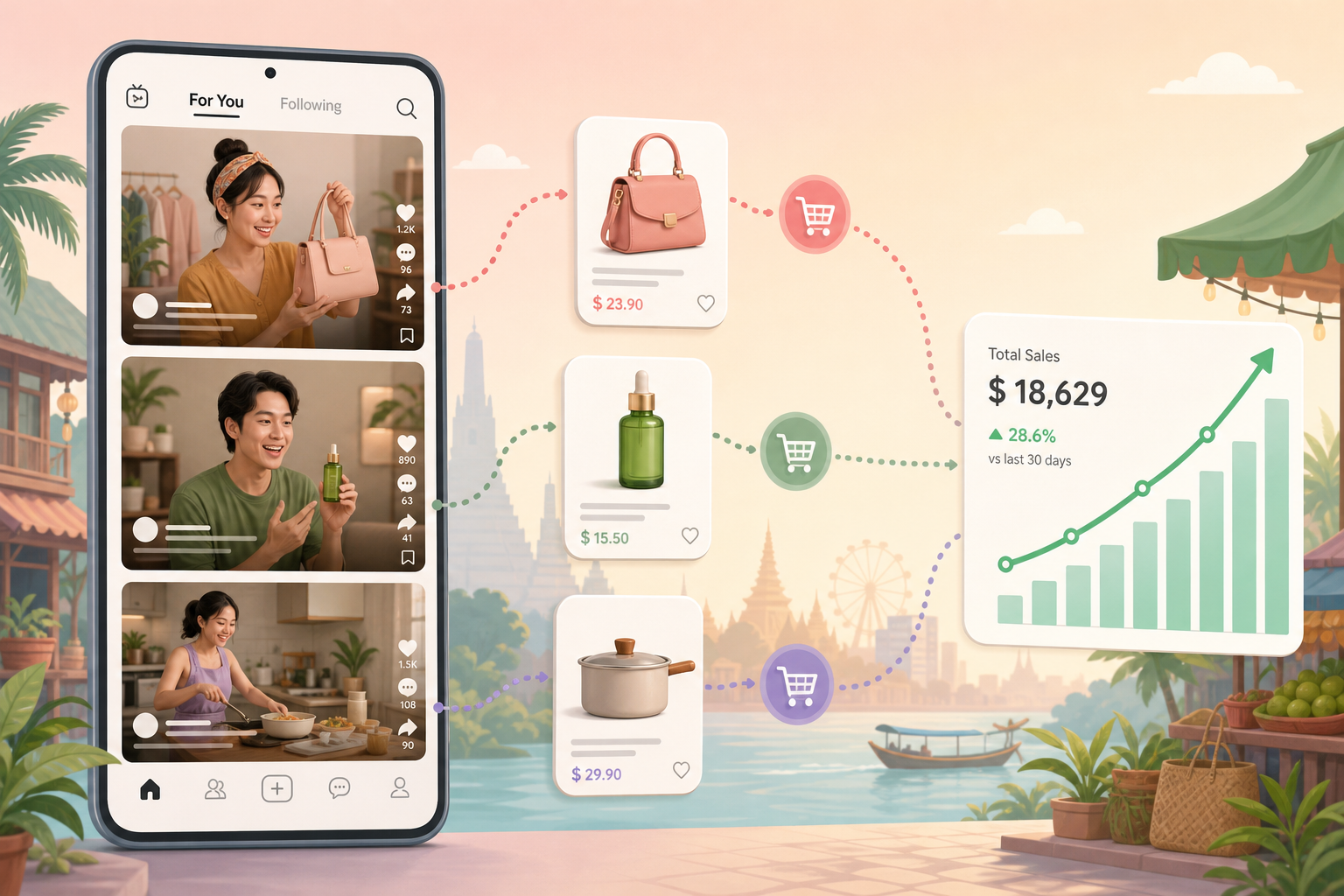
The practical tools that make this possible are tracked affiliate links, unique discount codes, and shoppable posts that tie a creator's content directly to a brand's sales data. Without these, you are running awareness advertising and calling it performance marketing. With them, you can see exactly which creator, which video, and which platform drove revenue. That accountability changes how you brief creators, how you measure success, and how you decide where to invest next.
Choosing the right creator tier for your product
Not every product suits every creator tier, and follower count alone is a poor guide to campaign fit. Mega-influencers (typically those with very large followings) deliver broad reach and are useful when a brand needs rapid awareness across a wide demographic. But their audiences are diverse, engagement rates tend to be lower relative to their size, and the cost per conversion can be high.
Micro-influencers, by contrast, often have highly engaged niche audiences whose interests align tightly with a specific product category. A micro-creator focused on Singapore skincare routines will reach fewer people than a celebrity, but the proportion of followers who are genuinely interested in buying a new serum is far higher. For most e-commerce brands, a mix of tiers works better than betting everything on one. See how KOLs and influencers differ in practice before finalising your creator mix.
Platform and content format shape conversion rates
Where a creator posts matters as much as who they are. TikTok Shop and Shopee are built with purchasing infrastructure inside the platform, so a creator's video or livestream can include a product link that a viewer taps without leaving the app. This in-platform purchase path dramatically reduces friction compared to sending traffic to an external website.
Short video content works well for demonstrating a product quickly and triggering impulse purchases. Livestream commerce adds a real-time layer: the creator answers questions, shows the product in use, and drives urgency through limited-time offers, all within a single session. If your brand sells on TikTok Shop, understanding how TikTok live streamers work with brands is worth doing before you plan your creator brief. For brands on Shopee, Shopee livestream campaigns follow a similar logic but with platform-specific mechanics.
Briefing creators for sales outcomes, not just content
A creator brief written for brand awareness looks very different from one written for conversion. The conversion-focused brief specifies the product's key purchase trigger (what makes someone decide to buy), the call to action the creator should use, the affiliate link or discount code to include, and any platform-specific requirements such as pinning a product card during a TikTok livestream.
Authenticity and commercial intent are not opposites, but they do need to be balanced. Creators who can speak naturally about a product while still directing their audience to a specific action consistently outperform those who deliver a scripted pitch. Give creators enough creative latitude to use their own voice, while being clear about the non-negotiable commercial elements. UGC content strategy follows similar principles and can complement your paid creator programme.
Measuring what your creator campaigns actually deliver
Tracking starts before the campaign goes live. Each creator should have a unique affiliate link or discount code so their individual contribution to sales is attributable. Beyond direct sales, useful metrics include click-through rate from content to product page, conversion rate from product page visits, and average order value from creator-driven traffic.
At the programme level, track which creator tiers, content formats, and platforms deliver the best return, then reallocate budget toward what works. A single campaign is a data point; an ongoing creator programme is a repeatable growth engine. For a detailed walkthrough of attribution and ROI frameworks, see how to measure influencer marketing return on investment. If you are planning your first campaign budget, what brands should budget for KOL campaigns gives useful context on cost structures.
The creator who drives the most sales is rarely the one with the most followers; it is the one whose audience trusts their recommendations enough to act on them.
How to run an e-commerce influencer campaign
-
Define your conversion goal first
Before selecting a single creator, decide what a successful outcome looks like in measurable terms. Is it units sold, revenue attributed to creator content, new customer acquisitions, or add-to-cart rate? Starting with a specific conversion goal shapes every subsequent decision, from which platform to use to which creator tier makes sense. Vague goals produce vague results.
-
Match creator tier to product and audience
Map your target customer's demographics and interests against available creators. For niche or high-consideration products, micro-influencers with engaged category-specific audiences typically outperform mega-influencers on a cost-per-conversion basis. For broad consumer products where reach matters, a mix of tiers gives you both scale and credibility. Check audience demographics, not just follower counts, before committing. Explore KOL marketing services if you need help identifying the right creators for your category.
-
Set up trackable attribution before launch
Issue each creator a unique affiliate link or discount code tied to your analytics setup. On TikTok Shop and Shopee, platform-native tools can track in-app purchases directly to a creator's content. Attribution set up after a campaign launches cannot be retrofitted to content already published, so this step must happen before any content goes live.
-
Brief for the purchase trigger, not the product feature
Tell creators what makes someone decide to buy, not just what the product does. A brief that leads with the purchase trigger (the problem solved, the result achieved, the feeling created) gives creators the raw material to make content that resonates and converts. Include the required call to action, the affiliate link or code, and any platform-specific mechanics such as product card pinning during a livestream. UGC creation services can supplement creator content with additional authentic assets.
-
Run the campaign and monitor in real time
Once content goes live, monitor performance at the creator level and the platform level. On livestream formats, real-time monitoring lets you identify which products are converting and prompt the creator to spend more time on high-performing items. For short video, track view-to-click and click-to-purchase rates in the first 48 hours, when algorithmic distribution is at its peak.
-
Analyse results and build on what worked
After the campaign, compare each creator's attributed sales, content engagement, and cost per conversion. Identify which creator tiers, content formats, and platforms delivered the best return. Reinvest in the creators and formats that performed, and use the data to sharpen your next brief. Over multiple campaigns, this feedback loop is what separates a one-off activation from a scalable creator programme.
Benefits
Sales tied directly to creator content
Affiliate links, discount codes, and shoppable posts connect each creator's content to attributable purchase data, so you know which creator and which format drove revenue rather than guessing.
Audience trust that advertising cannot replicate
Creators have built genuine relationships with their followers. A product recommendation from a trusted creator carries social proof that a brand's own advertising cannot manufacture, particularly for new or unfamiliar products.
Reduced purchase friction on social platforms
On TikTok Shop and Shopee, in-platform purchasing means a viewer can go from watching a creator's video to completing a purchase without leaving the app, removing the drop-off that occurs when traffic is sent to an external site.
Scalable content production through creators
Each creator produces content independently, giving brands multiple pieces of authentic content from a single campaign brief, content that can also be repurposed as UGC for paid ads or organic social channels.
Data that improves every subsequent campaign
Creator-level performance data reveals which tiers, formats, and platforms convert best for your specific product, turning each campaign into actionable intelligence that sharpens the next one.
E-commerce influencer marketing in practice
Beauty brand launching a new skincare product on TikTok Shop
A beauty brand launching a new serum partners with a mix of mid-tier and micro-creators who focus on skincare routines. Each creator receives a unique affiliate link and a brief centred on the product's visible result rather than its ingredient list. Short videos showing before-and-after use cases drive traffic directly to the TikTok Shop product page, where the purchase happens in-app. Conversion rates are tracked per creator, allowing the brand to identify which content style and creator profile performs best before scaling spend. This approach is closely connected to influencer marketing agency services that manage creator selection and attribution end to end.
Overseas health supplement brand entering the Singapore market
A health supplement brand from China entering Singapore needs both local credibility and sales velocity. Working with Singapore-based micro-influencers in the fitness and wellness space builds audience trust faster than paid advertising alone, because local creators carry cultural relevance that overseas brands cannot manufacture directly. Unique discount codes tied to each creator's content give the brand clean data on which communities are converting, informing both the creator programme and the product positioning for the local market. Brands in this situation often benefit from social commerce creator marketing paired with a structured market entry approach.
Consumer goods brand scaling from one-off campaigns to always-on
A consumer goods brand that has run a few individual influencer activations wants to build a more predictable revenue channel. The shift to an always-on creator programme means working with a consistent roster of creators over months rather than one-off briefs, building audience familiarity with the product over time. Repeat exposure through trusted creators compounds over time: audiences who see a product mentioned across multiple pieces of content are more likely to convert than those who see a single sponsored post. Tracking cumulative attributed sales across the programme reveals the true ROI of the creator relationship. How to measure influencer marketing ROI covers the attribution frameworks that make this measurable.
Footwear brand using livestream commerce to clear seasonal inventory
A footwear brand needs to move seasonal stock within a defined window. A shoppable livestream on Shopee or TikTok Shop, hosted by a creator with an engaged fashion audience, combines product demonstration with real-time audience interaction and time-limited offers. The creator's live Q&A addresses purchase objections on the spot, which shortens the decision cycle compared to static content. Sales are tracked in real time during the session, and the brand can see exactly how much revenue the livestream generated by the time it ends. This is the core mechanic behind Shopee livestream commerce campaigns.
Common questions about e-commerce influencer marketing
Does follower count determine how many sales a creator will drive?
Not reliably. Engagement rate, audience demographics, and platform fit are stronger predictors of conversion than follower count alone. A micro-influencer with a highly engaged niche audience will often drive more sales per post for a relevant product than a mega-influencer whose audience is broad and less targeted.
What is the difference between an affiliate link and a discount code in influencer campaigns?
Both are attribution tools, but they work differently. An affiliate link tracks clicks and purchases automatically through URL parameters, giving you data on the full purchase journey. A discount code is easier for a creator to mention verbally (in a video or livestream) and gives the audience a purchase incentive, but relies on the customer entering the code at checkout. Many campaigns use both together.
Which platforms work best for e-commerce influencer marketing in Singapore?
TikTok Shop and Shopee are the primary platforms for shoppable creator content in Singapore, because both have native purchasing infrastructure that lets audiences buy without leaving the app. TikTok's short video and livestream formats are particularly strong for discovery-driven purchases, while Shopee's established e-commerce user base makes it effective for brands with existing marketplace presence. Xiaohongshu (RedNote) is also worth considering for brands targeting Chinese-speaking consumers in the region.
How many creators should a brand work with in a single campaign?
There is no fixed number, but working with multiple creators across different tiers gives you both reach and conversion data. A small group of creators also lets you compare performance and identify which profiles work best for your product before scaling. Starting with a manageable cohort and expanding based on results is more efficient than a very large launch with no prior performance signal.
Ready to connect your creator campaigns to real sales data
Confetti works with brands on TikTok Shop and Shopee to build creator programmes that are measured on revenue, not reach. If you want to move from one-off influencer activations to a campaign structure built around conversion, talk to the team about what that looks like for your product and platform.