How brands are replacing flat sponsorship fees with commission-based creator partnerships that pay only when sales happen.
Affiliate model vs flat-fee sponsorships: the core difference
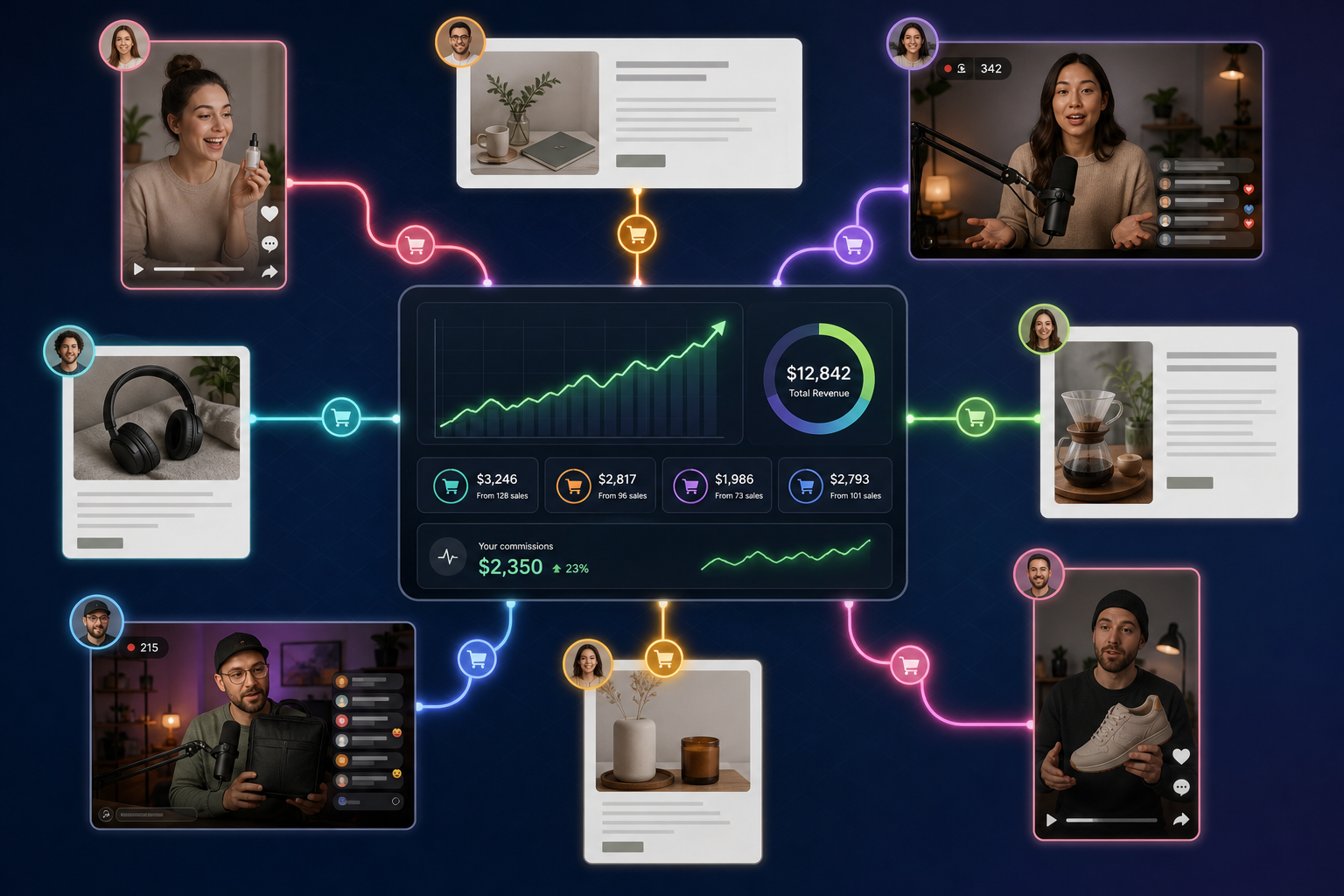
A flat-fee sponsorship pays a creator for publishing content, regardless of what that content produces. Influencer affiliate marketing flips the payment logic entirely: the brand issues each creator a unique tracking link or promo code, and the creator earns a commission only when a viewer clicks through and completes a purchase. For brands, this removes the risk of paying for reach that never converts. For creators, it replaces a one-time fee with an ongoing income stream that keeps earning as long as their content drives traffic. The practical consequence is that both sides are now pulling in the same direction. A creator who earns 10% of every sale they generate has a strong incentive to publish persuasive, well-targeted content rather than a perfunctory mention. That alignment is the structural advantage the affiliate model has over traditional sponsorships, and it is why more brands are shifting at least part of their influencer marketing budget toward commission-based arrangements.
How tracking actually works across platforms
Attribution in influencer affiliate marketing relies on three main mechanisms: unique referral links, personalised promo codes, and platform-native affiliate tools. Unique links (often shortened and creator-specific) pass a tracking parameter to the retailer's system, recording which creator drove the click and whether it resulted in a purchase. Promo codes serve the same function on platforms where links are harder to embed, such as TikTok videos where clickable links in captions are restricted: a viewer types a code at checkout and the system credits the creator. TikTok Shop has its own built-in affiliate programme that assigns creators trackable product links directly within the platform, making attribution more seamless for brands already selling through the shop. Shopee operates a similar affiliate layer. The practical implication for brands is that the platform you sell on shapes which tracking method you use, and you need to decide that before you recruit creators. For a deeper look at how to measure what each creator actually delivers, the guide on KPIs for influencer marketing covers attribution metrics in detail.
Commission structures and how rates are typically set
Commission rates in influencer affiliate marketing generally range from 5% to 30%, with the exact figure driven by product category, margin, and platform norms. High-margin categories like beauty, supplements, and digital products tend to sit at the higher end, while lower-margin goods such as electronics or household staples cluster toward the lower end. Brands typically choose between a flat percentage of each sale and a tiered structure where creators unlock higher rates once they hit volume thresholds. Tiered structures reward top performers and give mid-tier creators a reason to push harder. Some programmes also layer in a small base fee alongside the commission, particularly for creators who are being asked to produce original content rather than simply reshare a product link. The right structure depends on your margins, your category, and how much content production you want creators to invest in. Understanding the full cost picture, including production and platform fees alongside commission payouts, is covered in the influencer marketing budget guide.
Evergreen content and the compounding value of affiliate posts
One underappreciated advantage of the affiliate model is that a well-performing piece of content keeps generating commissions long after it is published. A skincare review video that ranks in search results, or a supplement unboxing that gets reshared, can drive steady traffic for months without any additional spend from the brand. This is the passive income dynamic that makes affiliate arrangements attractive to creators, and it is also what makes them scalable for brands: you can run dozens of creators simultaneously, each producing content that compounds over time, without proportionally increasing your budget. The flip side is that evergreen content requires upfront quality. A creator who produces a rushed post to claim a commission quickly will generate little lasting traffic. Brands that set clear content expectations, and consider pairing affiliate arrangements with UGC content creation standards, tend to get more durable results from their programmes.
Influencer affiliate marketing examples across verticals
Beauty creator promoting skincare with promo codes
A skincare brand partners with a beauty creator who publishes tutorial videos on TikTok and Instagram. Rather than a flat sponsorship fee, the creator receives a personalised discount code that viewers enter at checkout. The code gives the brand precise attribution and gives the creator's audience a tangible incentive to act. Because the content is tutorial-based, it continues attracting search traffic and new viewers long after posting, meaning the commission keeps accruing without additional brand spend. This is one of the most common influencer affiliate marketing examples in the beauty category, where high margins support meaningful commission rates and audiences actively seek product recommendations. For brands running beauty and lifestyle campaigns, this model is a natural fit.
Fitness influencer driving supplement sales via tracked links
A sports nutrition brand recruits fitness creators to include tracked affiliate links in their YouTube video descriptions and TikTok bios. Each creator links to a specific product page, and the brand's system records every click and resulting purchase against that creator's ID. Supplement categories typically support higher commission rates because margins are strong and purchase intent among fitness audiences is high. The brand can run this programme across dozens of creators simultaneously, each reaching a slightly different fitness sub-community, without the fixed cost of a traditional KOL campaign. Creators who perform well can be moved to a tiered structure that rewards volume, giving them a reason to produce more content featuring the product over time.
Lifestyle blogger embedding affiliate links in review posts
A home goods brand works with lifestyle bloggers who publish long-form review posts on their own sites and link out to the brand's Shopee store using tracked affiliate URLs. The blog format is well-suited to affiliate marketing because readers arrive with research intent, meaning they are already partway through a purchase decision. The tracked URL records which blog drove the click, and Shopee's affiliate layer attributes the resulting sale back to that creator. Because blog posts can rank in search results for months or years, the brand benefits from compounding traffic without ongoing spend. This model pairs naturally with UGC content strategies that prioritise authentic, detailed product coverage over polished brand advertising.
TikTok Shop creator using platform-native affiliate tools
A consumer electronics accessory brand activates creators through TikTok Shop's built-in affiliate programme, which assigns each creator a trackable product link they can embed in short videos and livestreams. The creator showcases the product during a live session, drops the affiliate link in the chat, and viewers who click and purchase are attributed directly to that creator within the platform's dashboard. TikTok Shop's native attribution removes the need for third-party tracking tools, making it easier for brands to manage a large number of creators at once. Brands that already sell on TikTok Shop can activate this affiliate layer with relatively low operational overhead, and the live commerce format tends to drive higher conversion rates than static posts because viewers can ask questions in real time. For more on how live creators work within this model, the guide on TikTok live streamers explains the format in depth.
Benefits
Lower upfront financial risk
Because payment is tied to completed sales rather than content publication, brands only spend when the campaign delivers. This makes affiliate programmes significantly lower risk than flat-fee sponsorships, where the brand pays regardless of whether the content converts.
Scalable across many creators at once
An affiliate programme can run across dozens or hundreds of creators simultaneously without proportionally increasing fixed costs. Each creator operates independently, so adding more creators to the programme increases potential reach without adding management complexity proportional to a traditional KOL campaign.
Ongoing revenue from evergreen content
A review video or blog post with an embedded affiliate link can continue driving sales for months after publication. Brands benefit from compounding traffic without additional spend, particularly when creators produce content formats that rank in search or get reshared over time.
Clearer ROI measurement per creator
Unique tracking links and promo codes make it possible to attribute every sale back to the specific creator who drove it. This granularity allows brands to identify top performers, reallocate budget toward what works, and cut arrangements that generate traffic without conversions.
Creator incentives aligned with brand outcomes
When a creator earns a percentage of every sale they generate, their financial interest is directly aligned with the brand's revenue goals. This structural alignment tends to produce more persuasive, better-targeted content than a flat-fee arrangement where the creator's obligation ends at publication.
The shift from paying for exposure to paying for results does not just change the budget line - it changes what creators are motivated to make.
Influencer affiliate marketing examples: questions brands ask
What commission rates are typical for influencer affiliate marketing?
Rates generally range from 5% to 30% of each sale, with the exact figure driven by product category and margin. High-margin categories such as beauty, supplements, and digital products tend to sit toward the upper end of that range, while lower-margin categories like electronics or household goods cluster lower. Some brands also layer a small base fee on top of the commission when they are asking creators to produce original content rather than simply share a link.
How does attribution work on TikTok Shop and Shopee?
Both platforms have native affiliate tools that assign trackable product links to individual creators, so attribution happens within the platform's own dashboard rather than requiring third-party software. On TikTok Shop, creators can embed affiliate links directly in short videos and livestreams. Shopee operates a similar affiliate layer for its marketplace. Where platform-native links are not available, personalised promo codes entered at checkout serve the same attribution function. For a full breakdown of the metrics worth tracking, see the guide on measuring influencer campaign KPIs.
Does a creator need a large audience to make affiliate marketing worthwhile?
Not necessarily. Audience engagement and category relevance matter more than raw follower count in an affiliate programme. A creator with a smaller, highly engaged audience that is actively interested in your product category will typically generate more conversions than a larger generalist whose followers have no purchase intent for what you sell. Micro-creators are often the most cost-effective entry point for a first affiliate programme precisely because their costs scale with results rather than requiring upfront guarantees based on reach.
How is influencer affiliate marketing different from a standard KOL sponsorship?
A standard KOL sponsorship pays a flat fee for content publication, regardless of what that content produces in terms of sales or actions. Influencer affiliate marketing ties every payment to a measurable outcome, typically a completed purchase attributed to the creator's unique link or code. The practical difference is that affiliate arrangements are lower risk for brands (no spend without results) and create an ongoing income stream for creators rather than a single payment. The two models can also be combined: a reduced base fee plus commission is a common hybrid structure.
Can affiliate marketing work alongside livestream commerce?
Yes, and the two formats are particularly complementary. Livestream creators can share affiliate links in the chat or on-screen during a live session, allowing viewers to purchase in real time while the creator is actively demonstrating the product. TikTok Shop's native affiliate tools are built to support this use case directly. The live format tends to drive higher conversion rates than static posts because viewers can ask questions and see the product used in context. For more on how this works in practice, the guide on TikTok live streamers and brand partnerships covers the format in detail.
How to launch a creator affiliate programme
-
Define your commission structure first
Before approaching any creator, decide on the rate, the payment trigger (sale, lead, or app install), and whether you will use a flat percentage or a tiered model. Setting the structure before recruitment prevents renegotiation later and ensures every creator is working under the same terms. Factor in your product margin and the platform you are selling on, since TikTok Shop and Shopee each have their own affiliate mechanics that affect how commissions are calculated and paid out. If you plan to sell through TikTok Shop, familiarise yourself with the platform's native affiliate tools at this stage.
-
Recruit and vet creators for fit
Audience alignment matters more than follower count in an affiliate programme. A creator with a smaller, highly engaged audience in your product category will typically outperform a larger generalist whose followers have no purchase intent for your product. Vet creators by reviewing their past content, comment quality, and whether their audience overlaps with your target buyer. For KOL campaign management, this vetting step is where most of the strategic work happens. Micro-creators (those with smaller but loyal audiences) are often the most cost-effective entry point for a first affiliate programme, since their commission costs scale directly with results rather than requiring upfront guarantees.
-
Distribute tracking assets and brief creators
Once creators are confirmed, issue each one their unique tracking link or personalised promo code and provide a clear content brief. The brief should cover the product's key claims, any mandatory disclosures (affiliate relationships must be disclosed in most markets), preferred content formats, and a timeline. Creators who understand the product and the audience they are speaking to produce content that converts at a higher rate. Avoid over-scripting: the authenticity that makes creator content effective depends on the creator's own voice. Pair the brief with product samples and, where relevant, access to brand assets that help creators produce higher-quality posts.
-
Monitor performance and optimise the programme
Track each creator's link or code performance weekly: clicks, conversion rate, and revenue generated. Identify which creators are driving disproportionate results and consider deepening those relationships, either by increasing their commission tier or by co-creating more content with them. Drop or renegotiate with creators who generate consistent traffic but no conversions, since this signals an audience mismatch rather than a content problem. Use the aggregated data to refine your commission structure over time. The performance marketing measurement guide outlines the specific metrics worth tracking at each stage of a campaign.
Ready to connect your creators directly to revenue
Confetti builds and manages performance-driven creator programmes for brands selling on TikTok Shop and Shopee in Singapore. If you are ready to move beyond flat-fee sponsorships and build an affiliate model that pays on results, get in touch to discuss what the right structure looks like for your category.