A practical look at how brands across categories have approached live shopping and what the outcomes reveal.
See how social commerce campaigns are built to convert
Explore how Confetti runs live shopping campaigns that turn viewers into buyers across TikTok Shop and Shopee.
Why brands are betting on live shopping now
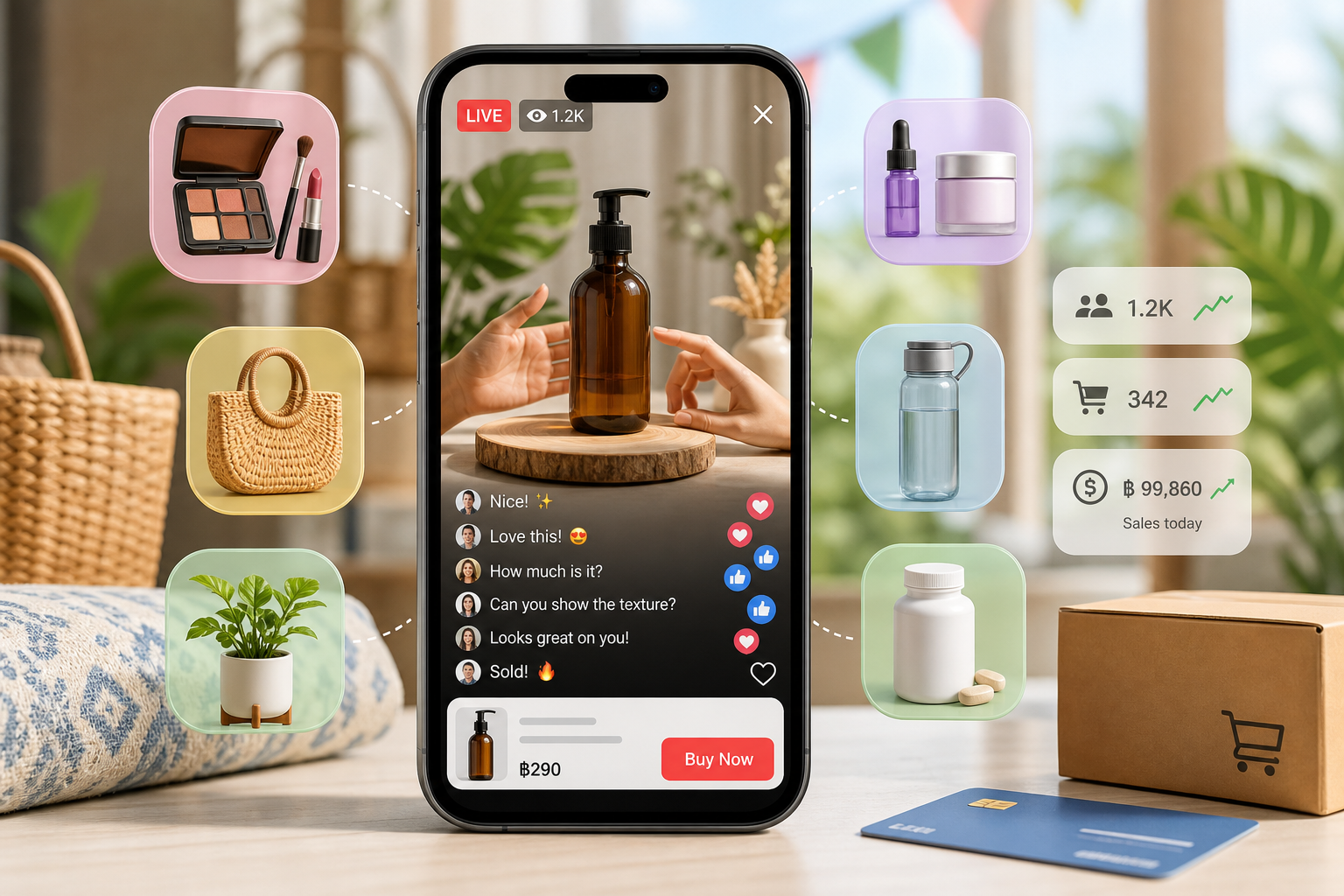
Live shopping sits at the intersection of entertainment and instant purchase, and the brands seeing the strongest results treat it that way. Rather than running a livestream as a product demo, the brands that convert well build their sessions around real-time engagement: answering questions, responding to comments, and creating a sense of occasion that a product page cannot replicate. In Southeast Asia, platforms like TikTok Shop and Shopee have made this format native to the shopping journey, not an add-on. Brands entering this space for the first time often underestimate how much the format differs from a standard ad placement. A livestream commerce campaign requires scripting, host chemistry, product sequencing, and a plan for converting viewers who arrive at different points in the session.
What the case study evidence actually shows
Across categories, the brands that publish honest case studies tend to share a few consistent patterns. First, results vary sharply by category: beauty, health supplements, and lifestyle products tend to convert faster in live shopping environments because the host can demonstrate texture, application, or before-and-after effects in real time. Second, the brands that scale successfully do not rely on a single hero livestream. They build a cadence, running sessions regularly so the algorithm learns who their audience is and so returning viewers develop a habit. Third, the role of the host matters more than most brands expect. Whether a brand uses an in-house presenter or works with a TikTok live streamer, the host's ability to handle objections and maintain energy directly affects conversion.
Regional context shapes what works in Singapore
Singapore's social commerce market has specific characteristics that make direct comparisons to China or the US misleading. The audience is multilingual, relatively high-income by regional standards, and accustomed to comparing products across platforms before buying. This means trust signals matter more than volume discounts alone. Brands entering the Singapore market, particularly those from China looking to localise, often find that UGC and creator-led content builds the credibility that a polished ad cannot. The Xiaohongshu (RedNote) platform also plays a role in the discovery phase for certain demographics, meaning a brand's social commerce results are rarely the product of one platform alone. Understanding the full path from discovery to purchase is essential before attributing outcomes to any single channel.
Common challenges brands encounter in live shopping
The gap between a brand's first live session and a consistently converting programme is where most challenges surface. Inventory planning is a recurring issue: a successful session can sell through stock faster than anticipated, and a stockout mid-stream damages trust with viewers who were ready to buy. Production quality is another friction point. Brands sometimes launch with minimal setup and find that poor audio or lighting causes drop-off before the product is even presented. Beyond the technical side, brands frequently underestimate the importance of creator fit. A KOL or influencer who is credible in beauty may not translate to health supplements, even if their follower count is identical. Matching creator profile to product category is one of the clearest predictors of live shopping performance.
Measuring outcomes beyond view counts
View counts and peak concurrent viewers are the metrics most brands report first, but they are not the ones that matter most to a marketing manager building a business case. The metrics that actually demonstrate social commerce value are conversion rate within the session, average order value, return purchase rate from live viewers, and the cost per acquisition relative to other channels. Brands that track these over multiple sessions can identify which host formats, time slots, and product sequencing decisions drive the best outcomes. For a detailed framework on attribution and ROI, the guide on measuring return on investment from influencer marketing covers the methodologies that apply directly to live shopping measurement.
The brands that scale live shopping successfully do not rely on a single hero session. They build a cadence, and the results compound over time.
How to evaluate a live shopping approach for your brand
-
Audit your product's live suitability
Not every product performs equally well in a live format. Products that benefit most are those where demonstration adds purchase confidence: skincare application, supplement comparisons, footwear fit, or food preparation. Before committing to a live shopping programme, assess whether a host can meaningfully show your product in under two minutes, and whether a viewer watching live would have a reason to buy now rather than later. If the answer is yes, live shopping is likely a strong fit.
-
Choose the right platform for your audience
TikTok Shop and Shopee serve overlapping but distinct audiences in Singapore. TikTok's algorithm surfaces live sessions to users who have not yet followed the brand, making it stronger for acquisition of new customers. Shopee's live format tends to perform better for brands with an existing Shopee customer base, where the session reinforces loyalty and drives repeat purchase. Brands new to both platforms should consider starting on the one where their product category already has traction before expanding. Shopee livestream campaigns and TikTok Shop each have their own mechanics worth understanding before launch.
-
Plan the session structure before going live
A live shopping session that converts is built around a clear sequence: an opening hook to retain viewers who just joined, a product demonstration phase, a period for live Q&A, and a closing call to action. Scripting the key beats (rather than the full session word for word) gives the host a framework while preserving the spontaneity that makes live formats engaging. Brands that skip this step often find their sessions run long, lose momentum, or fail to direct viewers toward the purchase action.
-
Select and brief your host or creator
The host is the most influential variable in a live shopping session's performance. Whether you use an in-house presenter, a professional live streamer, or a KOL from your category, they need a thorough product brief that goes beyond features. The host should understand the target buyer's objections, the product's key differentiators, and which claims they can and cannot make on air. A well-briefed host can handle unexpected questions without losing the audience's trust.
-
Track session metrics and iterate
After each session, review the data at three levels: viewer retention (when did people drop off), conversion events (which product moments drove purchases), and post-session behaviour (did live viewers return to buy again). Brands that treat each session as a data point rather than a standalone event build a clearer picture of what works for their specific audience. Over multiple sessions, patterns in time slot, product order, and host style become actionable. For a structured approach to tracking, see the guide on influencer marketing ROI measurement.
-
Extend reach with supporting content
A live session does not have to end when the stream closes. Clipping high-performing moments from the live session into short-form video content extends the campaign's reach to audiences who were not watching live. This is where UGC and creator-led short video production becomes part of the same strategy rather than a separate workstream. Brands that repurpose live content consistently get more value from each session and build a library of social proof over time.
Benefits
Real-time purchase intent capture
Live shopping creates a moment of heightened purchase intent that static content cannot replicate. When a host demonstrates a product and a viewer can buy within the same session, the gap between interest and action collapses.
Trust built through demonstration
Seeing a product used in real time, with a host answering live questions, addresses objections that a product page leaves unresolved. Live demonstration is particularly effective for categories like beauty, health, and footwear where sensory experience matters.
Algorithm-driven audience discovery
On TikTok Shop, live sessions are surfaced to users beyond the brand's existing followers, giving brands a route to new customer acquisition that does not require a pre-built audience.
Reusable content from each session
Clipped moments from live sessions become short-form video assets that extend campaign reach. A single live session can generate multiple pieces of content for organic and paid distribution.
Measurable, session-level data
Live shopping platforms provide granular data on viewer retention, click-through, and conversion within each session. This makes it possible to iterate on what works across hosts, product sequences, and time slots with a speed that longer campaign formats do not allow.
Brand scenarios where live shopping has made a difference
A beauty brand entering the Singapore market
An overseas beauty brand with no existing local audience faces a credibility gap when it enters Singapore. Live shopping with a locally recognised creator bridges that gap faster than display advertising because the creator's existing audience provides an immediate trust transfer. The session allows the host to demonstrate product texture and application in real time, addressing the objections a new customer would have before buying. Creator fit to category is critical here: a host with a following built around skincare routines will outperform a general lifestyle creator even if the follower counts are similar. Brands in this situation often pair the live session with UGC content creation to build a broader content layer around the launch.
A health supplement brand building repeat purchase
Health supplement brands face a specific challenge in live shopping: regulatory constraints limit certain claims, and the purchase decision often requires more education than a single session provides. The brands that succeed in this category run regular, scheduled sessions rather than one-off launches, building a viewer base that returns for updates, new product introductions, and community Q&A. Over time, the live session becomes a retention tool as much as an acquisition channel. Tracking return purchase rate from live viewers, rather than just session conversion, reveals the true value of this approach.
A footwear brand driving Shopee sales through live sessions
Footwear is a category where fit anxiety often blocks online purchase. A brand like Bata, which appears in Confetti's client roster, can use live shopping to address this directly: the host tries on multiple sizes, demonstrates width and flexibility, and answers viewer questions about specific foot shapes in real time. This kind of live demonstration reduces the perceived risk of buying footwear without trying it first. Pairing the live session with a clear returns policy communicated on air further reduces friction and lifts conversion within the session.
A financial services brand reaching new audiences via social commerce
Financial services brands face a different challenge in live shopping: the product is intangible and the compliance requirements around what can be said are strict. Brands in this category, such as Bybit (which appears in Confetti's client roster), tend to use live and creator formats for awareness and education rather than direct conversion. The goal is to make a complex product category accessible and trustworthy to a younger, social-native audience. The measure of success shifts from session conversion rate to metrics like sign-up intent, content engagement, and brand search volume following a campaign. See social commerce creator marketing services for how this type of campaign is structured.
Common questions about social commerce case studies and live shopping
Which product categories perform best in live shopping?
Beauty, health supplements, lifestyle products, and food tend to convert well in live formats because real-time demonstration adds purchase confidence that a product image cannot. Categories where the host can show application, texture, fit, or preparation in under two minutes are generally the strongest candidates. That said, even categories like financial services and edtech have found value in live formats by shifting the goal from direct conversion to education and brand trust.
How many live sessions does a brand need before seeing consistent results?
There is no fixed number, but brands that treat live shopping as a repeatable programme rather than a one-off event consistently report stronger outcomes. Each session generates data on what host style, product sequence, and time slot works for a specific audience, and that learning compounds over time. A single session rarely provides enough signal to draw firm conclusions about the channel's value for a brand.
Does the brand need a large existing following to succeed in live shopping?
Not necessarily. On TikTok Shop, the platform's algorithm can surface live sessions to users who do not yet follow the brand, which makes new audience acquisition possible without a pre-built follower base. Working with a creator or KOL who already has a relevant audience is another route to reach that does not depend on the brand's own account size. The KOL vs influencer guide covers how to choose the right type of creator for this.
What metrics should a brand track to evaluate a live shopping campaign?
The most useful metrics are conversion rate within the session, average order value, viewer retention curves (to identify when drop-off happens), and return purchase rate from live viewers. View counts and peak concurrent viewers are easy to report but do not tell you whether the session drove business value. For a full measurement framework, the guide on measuring influencer marketing ROI applies directly to live shopping campaigns.
Build a live shopping programme measured on real sales outcomes
If you are evaluating live shopping for your brand or looking to improve results from an existing programme, Confetti works with brands across TikTok Shop and Shopee to build campaigns that are measured on sales, not just reach. Speak with the team about what a structured live shopping strategy looks like for your category.