A practical framework for brand marketers who want sales from TikTok, not just views.
Turn your TikTok presence into a real revenue channel
Talk to Confetti about a TikTok brand strategy built around conversions, not vanity metrics.
Why polished ads lose to native content on TikTok
TikTok's algorithm distributes content based on engagement signals, primarily watch time, replays, comments, and shares, not on follower count or ad spend. This means a brand-new account with a well-executed native video can outperform an established account posting broadcast-style advertising. The distinction matters because content that looks like a traditional ad gets scrolled past, while content that feels native to the feed earns the watch time the algorithm rewards.
Native content on TikTok follows the visual and audio language of the platform: trending sounds, casual framing, direct-to-camera delivery, and storytelling that hooks within the first two seconds. Tutorials, behind-the-scenes clips, and trend participation consistently outperform polished promotional material because they blend into the organic feed rather than interrupting it. For brands used to producing high-gloss creative, this requires a genuine shift in production philosophy, not just a change in aspect ratio.
The TikTok funnel: awareness, trust, then action
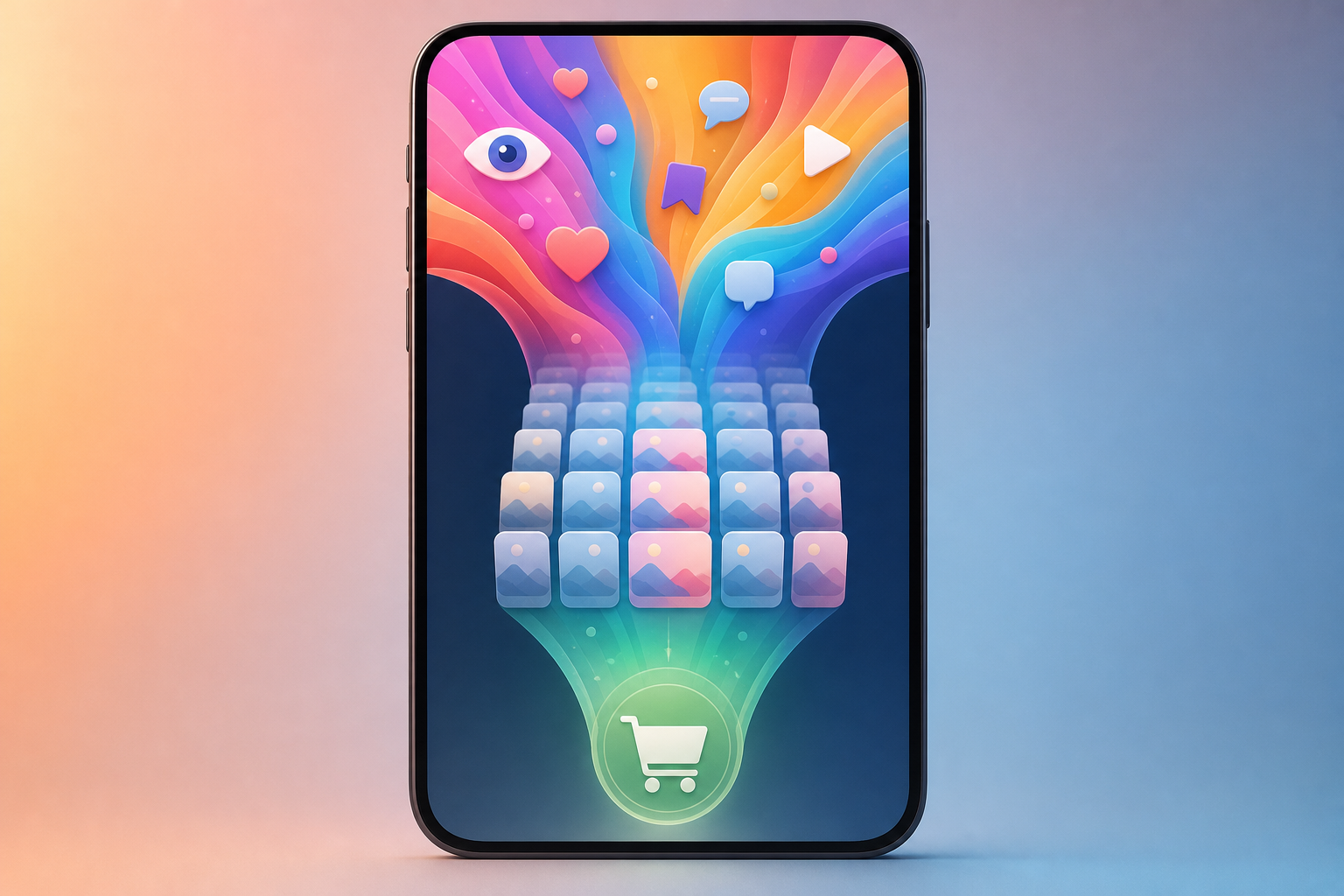
Conversion on TikTok follows a three-stage sequence that differs from most paid media funnels. Awareness comes first through content discoverability, whether that is a trending audio clip, a niche hashtag community, or a creator collaboration that puts your product in front of a new audience. At this stage, the goal is reach and relevance, not a hard sell.
Trust is built through consistency. Brands that post regularly with a recognisable voice and content style train the algorithm and the audience simultaneously. Viewers who encounter your content multiple times across different formats start to associate your brand with a specific feeling or category. That familiarity is what makes the third stage, action, possible. Action is driven by clear calls-to-action, product demonstrations, and TikTok Shop integrations that let viewers purchase without leaving the app. The shorter the path from discovery to checkout, the higher the conversion rate.
Brand account, creators, or paid ads: choosing your mix
Most brands on TikTok use some combination of three approaches: a brand-owned account, creator or KOL partnerships, and paid TikTok advertising. Each has a different cost structure, audience reach, and content velocity.
A brand-led account gives you full control over messaging and builds an owned audience over time, but it requires consistent content production and a genuine understanding of what performs on the platform. Creator partnerships accelerate reach and trust because audiences already have a relationship with the creator; the endorsement transfers credibility to your product. Paid TikTok ads, including Spark Ads that boost organic or creator content, extend the distribution of content that is already working. The most effective strategies treat these three levers as complementary rather than competing. A brand that publishes natively, activates relevant creators, and amplifies top-performing content with paid spend creates a compounding effect that none of the three approaches achieves alone. Understanding influencer marketing costs before committing to a creator mix helps you allocate budget across these channels with realistic expectations.
Content formats that consistently drive conversion
Certain content formats earn disproportionate engagement on TikTok relative to the effort required to produce them. Product tutorials and demonstrations show the item in use, answer unspoken objections, and create the kind of specificity that makes a viewer feel informed enough to buy. Behind-the-scenes content builds brand personality and invites curiosity. Trend participation, when the trend is genuinely relevant to the product, generates discovery from audiences who would never have searched for the brand directly.
User-generated content sits in a particularly strong position on TikTok because it is indistinguishable from organic creator content. When real customers or contracted UGC creators film themselves using a product, the result carries the authenticity signals the algorithm and the audience both reward. Livestream commerce adds a real-time layer: a live show on TikTok Shop combines product demonstration, audience Q&A, and a direct purchase path in a single session, making it one of the highest-converting formats available on the platform.
How to build your TikTok brand strategy step by step
-
Audit your current TikTok position
Before producing a single video, assess what already exists. If you have an account, review which content formats earned the most watch time and which were skipped. If you are starting from scratch, audit three to five competitor or category-adjacent accounts to identify what content styles are resonating with your target audience on the platform. The audit sets your baseline and prevents you from repeating approaches that the algorithm has already shown do not work for your category.
-
Define two to four content pillars
Content pillars are the recurring themes your account will return to consistently. For a health supplement brand, pillars might be ingredient education, customer results, lifestyle fit, and trend participation. For a fashion brand, they might be styling tutorials, behind-the-scenes sourcing, and trend response. Pillars create predictability for the algorithm and familiarity for the audience without locking you into a single format. Every piece of content you produce should map to one of these pillars, which makes planning faster and performance analysis cleaner.
-
Select and brief creators strategically
Creator selection on TikTok is not primarily about follower count. Engagement rate, content style, audience demographics, and category relevance matter more than raw reach. A creator with a highly engaged niche audience in your product category will typically outperform a mass-market influencer whose audience has no particular interest in what you sell. Once selected, brief creators on outcomes, not scripts: share the product's key proof points and the call-to-action, then let the creator translate that into their own voice. Overly scripted content loses the authenticity that makes creator partnerships work. You can read more about structuring these relationships through influencer marketing agency services.
-
Set up TikTok Shop and shoppable content
TikTok Shop removes the friction between content discovery and purchase by letting viewers buy directly from a video or livestream without leaving the app. Setting it up involves linking your product catalogue, enabling affiliate creator access so creators can tag your products in their own content, and configuring your shop's storefront. Shoppable video and livestream commerce are where TikTok's conversion advantage is most pronounced: a viewer who sees a product demonstrated in a live show and can purchase it in two taps is far more likely to convert than one redirected to an external website. What TikTok Shop is and how it works is worth understanding in detail before you configure your setup.
-
Measure performance at every funnel stage
Vanity metrics like total views tell you almost nothing about whether your TikTok strategy is working commercially. Measure at three levels: content performance (watch time, engagement rate, click-through on product links), creator performance (which partners are driving actual shop visits and conversions), and overall programme performance (revenue attributed to TikTok, customer acquisition cost, and return on ad spend where paid is involved). Reviewing these metrics weekly, not monthly, lets you identify what is working early enough to double down on it. A structured approach to measuring influencer marketing KPIs applies directly here and prevents budget from flowing to content that looks impressive but does not convert.
TikTok brand strategy in practice
A beauty or health DTC brand building from zero
A direct-to-consumer brand in beauty or health supplements typically has strong product stories but limited TikTok production capacity. The most effective starting point is a small roster of niche creators, three to six, who already speak to the brand's target demographic. These creators produce tutorial and results-based content that seeds awareness while the brand's own account begins establishing its content pillars. TikTok Shop affiliate links in creator videos create an immediate conversion path even before the brand account has built a significant following. UGC content creation can supplement creator output and provide a steady stream of authentic-feeling assets for both organic posting and paid amplification.
An overseas brand entering the Singapore market
A brand from China or another market entering Singapore faces a specific challenge: its existing content, creator relationships, and cultural references do not transfer directly. Local market entry on TikTok requires locally relevant creators who understand Singapore's consumer culture, language mix, and platform behaviour. The strategy typically starts with a discovery phase to identify which product positioning resonates locally, followed by a creator activation that generates authentic local content before any significant paid spend. Confetti's local expansion service is designed specifically for this scenario, helping overseas brands build credibility with Singapore audiences rather than simply repurposing content that worked elsewhere.
A larger brand adding livestream commerce to an existing strategy
An established brand with an existing TikTok presence and a product catalogue already on TikTok Shop is well positioned to add livestream commerce as a high-conversion channel. The key decision is whether to run brand-hosted live shows, activate creator-hosted live shows through affiliate arrangements, or both. Creator-hosted livestreams typically convert at higher rates because the host's audience already trusts their recommendations. A brand-hosted show requires more production investment but builds direct audience relationships. Either way, the show structure, product sequencing, promotional mechanics, and host briefing all affect conversion meaningfully. This is the kind of operational detail where a specialist in livestream commerce production adds the most value.
The algorithm does not care about your production budget; it cares whether people watch to the end.
TikTok brand strategy: questions brand marketers ask
How much budget does a brand need to start a TikTok strategy?
There is no single minimum, but the budget needs to cover at least content production and a small creator roster to generate enough content volume for the algorithm to work with. Spreading budget too thin across too many channels produces weaker results than concentrating it on TikTok-specific content and a focused creator set. For a detailed breakdown of how to think about creator and KOL investment, the influencer marketing cost guide covers the key variables.
How long does it take to see results from a TikTok brand strategy?
Awareness and engagement signals can appear within the first few weeks if content is genuinely native and the creator selection is on target. Conversion results, meaning measurable revenue from TikTok Shop or tracked links, typically take two to three months to stabilise as the algorithm learns which audiences respond to your content and as the creator roster builds familiarity with the product. Brands that expect immediate return from the first week of posting are measuring too early.
Should a brand focus on organic TikTok content or paid TikTok ads?
Organic content and paid ads serve different functions and work best together rather than as alternatives. Organic content builds the brand's native presence and trains the algorithm, while paid promotion, particularly Spark Ads that boost existing organic or creator content, extends the reach of content that is already earning engagement. Starting with organic and creator content to identify what resonates, then amplifying the top performers with paid spend, is a more efficient sequence than running paid ads on content that has not yet been validated organically.
How do you measure ROI from a TikTok brand strategy?
ROI measurement on TikTok requires tracking at multiple levels: content engagement (watch time, click-through rate on product links), creator-level conversion (which creators are driving actual purchases), and programme-level revenue (total attributed sales, customer acquisition cost, return on ad spend). TikTok Shop's native analytics provide direct purchase attribution for content and livestreams, which makes measurement more straightforward than on platforms where buyers leave the app to complete a transaction. A structured framework for this is covered in the influencer marketing KPIs guide.
Does TikTok work for brands outside beauty and fashion?
Yes. While beauty and fashion are among the most visible categories on TikTok, the platform's content discovery mechanism means that niche categories can find highly engaged audiences efficiently. Financial services, edtech, travel, and consumer goods brands have all built meaningful TikTok presences by identifying the content formats and creator voices that resonate with their specific audience segments. Confetti's client roster includes brands in financial services, health supplements, footwear, and travel, which reflects the platform's genuine breadth beyond the obvious lifestyle categories.
Benefits
Platform-specific content expertise
A specialist TikTok partner understands the content formats, trending audio mechanics, and algorithmic signals that determine whether a video earns watch time or gets skipped. Native content knowledge is the difference between a video that looks like a TikTok and one that merely exists on TikTok.
Access to a vetted creator network
Confetti operates as an official TikTok Shop Partner and MCN agency, with an existing network of creators across categories including beauty, health, lifestyle, and consumer goods. Matching the right creator to the right product requires category knowledge and performance data that takes time to build independently.
Full-funnel performance measurement
Rather than reporting on views and likes, a performance-focused partner tracks content engagement, creator-level conversion, and revenue attributed to TikTok Shop, giving brand marketers the data they need to make real budget decisions. Measurement tied to commercial outcomes separates a growth strategy from a content calendar.
Speed to market with proven formats
Brands building a TikTok strategy from scratch face a steep learning curve on what content formats work for their category. A specialist agency compresses that learning curve by applying what already works, reducing the trial-and-error period and getting conversion-ready content into the market faster.
Ready to build a TikTok strategy that drives real sales
Confetti works with brands across Singapore to build TikTok strategies that go beyond content production and into measurable revenue. Whether you are starting from scratch, entering a new market, or adding livestream commerce to an existing presence, the approach starts with your specific commercial goals. Reach out to talk through what a conversion-focused TikTok strategy looks like for your brand.