Understand exactly what an influencer marketing agency does before you decide whether to work with one.
See how a performance-focused agency runs influencer campaigns
Connect with a team that runs influencer campaigns built around measurable sales, not just reach.
What an influencer marketing agency actually is
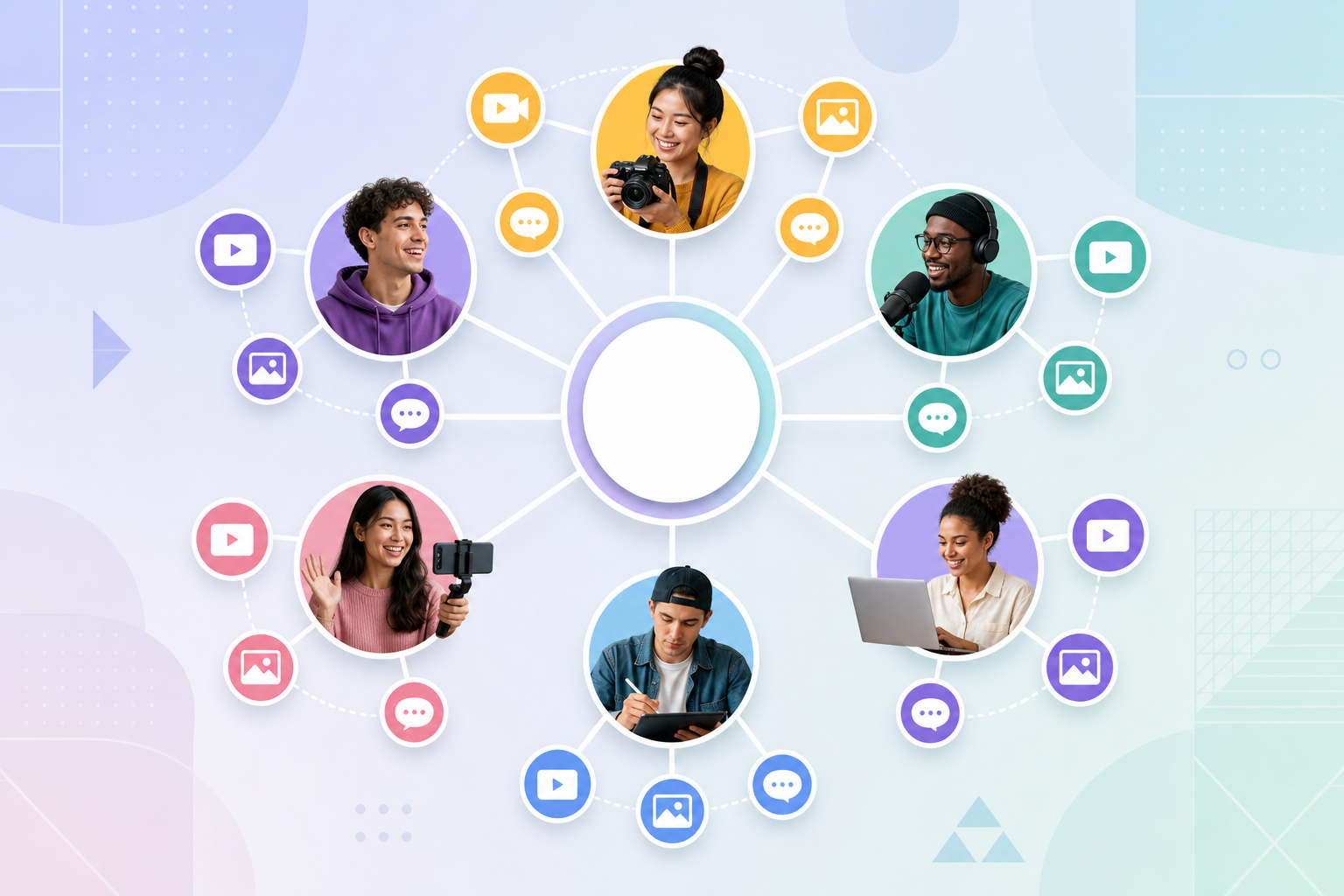
An influencer marketing agency is a specialist firm that connects brands with creators, manages the relationship between them, and oversees the content and campaigns that result. It sits between the brand and the creator ecosystem, handling the strategy, sourcing, negotiation, production oversight, and performance tracking that most brand teams do not have the in-house capacity to run well.
The term covers a wide range of operations. Some agencies focus narrowly on matchmaking, helping brands identify and contract relevant influencers. Others, particularly those working in social commerce markets like Singapore, operate as full-service performance partners, managing everything from creator briefing and content production to KOL campaign management and post-campaign ROI analysis. The scope you need depends on what your team can handle internally and what outcomes you are trying to drive.
Core services most influencer agencies provide
At the centre of any influencer agency's work is creator sourcing and vetting: identifying creators whose audience, content style, and engagement rate genuinely align with a brand's product and target customer. This goes beyond follower counts. Agencies assess audience demographics, past brand partnership performance, and platform-specific fit.
Beyond sourcing, most agencies handle campaign strategy, contract negotiation, creative briefing, and content approval workflows. Many also manage UGC and creator-led content production, ensuring that assets meet both platform requirements and brand guidelines. Performance-oriented agencies layer on reporting: tracking conversions, click-throughs, and revenue attribution so brands understand what each creator partnership actually delivered. Some agencies extend into livestream commerce and short video production, which have become central to social commerce on platforms like TikTok Shop and Shopee.
The difference between influencers, KOLs, and what agencies manage
One practical distinction agencies navigate daily is the difference between influencers and KOLs (key opinion leaders). Influencers typically build reach through lifestyle content and audience relatability, while KOLs carry category-specific authority that makes their recommendations carry more weight in particular niches, such as skincare, health supplements, or financial products. Understanding how influencers and KOLs differ matters because the right mix for a campaign depends on whether a brand is trying to build awareness or drive direct purchase decisions.
Agencies maintain rosters or networks of both types, and experienced ones know when to deploy each. In Southeast Asian markets, key opinion leaders often drive significantly stronger conversion rates than general lifestyle influencers, particularly in beauty, health, and e-commerce categories where trust and expertise are purchase triggers.
How platform expertise shapes what an agency delivers
Platform knowledge is not optional; it is central to whether a campaign works. An agency that understands TikTok's algorithm, Shopee's affiliate mechanics, or how multi-channel networks support creators will structure campaigns very differently from one that treats all social platforms as interchangeable. Short-form video, shoppable livestreams, and creator affiliate links each require distinct production approaches and performance benchmarks.
In Singapore's social commerce environment, agencies increasingly operate at the intersection of content and commerce, where the goal is not just views but directly attributable sales. This means working with platforms as official partners, understanding in-platform promotional tools, and building campaigns around conversion events rather than vanity metrics. Brands looking to grow on Shopee or TikTok Shop benefit most from agencies with verified, platform-specific credentials.
What to expect when you work with an influencer agency
The working relationship typically begins with a strategy brief: the agency learns the brand's target audience, product category, sales goals, and existing content assets. From there, it proposes a creator mix, content format, and posting cadence calibrated to the platform and objective.
Ongoing communication and reporting are what separate strong agencies from weak ones. A capable agency provides regular performance updates, flags underperforming creators early, and adjusts the strategy mid-campaign rather than waiting until the final report. For brands new to the format, agencies also handle the logistics that are easy to underestimate: usage rights, exclusivity clauses, disclosure compliance, and the back-and-forth of content revision. If you are evaluating options, the influencer marketing agency services page outlines what a full-service engagement looks like in practice.
A good influencer marketing agency does not just find creators; it manages the entire system that turns creator content into measurable brand revenue.
How an influencer agency runs a campaign
-
Define the campaign objective and audience
Before any creator is contacted, the agency works with the brand to establish what success looks like. The objective shapes everything else: a brand awareness campaign calls for different creators, content formats, and platforms than a campaign designed to drive direct purchases on TikTok Shop or Shopee. Audience demographics, product category, and budget parameters are all established at this stage.
-
Source and vet relevant creators
The agency searches its network and platform tools to identify creators whose audience composition, content style, and engagement history match the brief. Follower count is one signal among many; agencies also examine audience location, age, purchase intent signals, and the creator's track record with similar product categories. This step often involves reviewing past sponsored content performance, not just organic reach. For campaigns requiring category authority, agencies distinguish between influencers and KOLs and recommend the right mix.
-
Negotiate contracts and set content briefs
Once creators are selected, the agency manages the commercial and creative agreement. This covers deliverables (number of posts, formats, platforms), posting timelines, usage rights for the content after publication, exclusivity windows, and disclosure requirements. A clear content brief reduces revision cycles and ensures the creator's output aligns with brand guidelines without stripping out the authenticity that makes creator content effective in the first place.
-
Oversee content production and approval
Depending on the agency's model, it either reviews creator-produced content before it goes live or manages production directly, as is common with UGC campaigns and short video formats. The agency acts as the quality control layer between the brand and the creator, flagging content that misrepresents the product, misses key messaging, or fails platform guidelines. Turnaround time and revision management are handled by the agency team, not the brand.
-
Launch, monitor, and optimise in real time
Once content goes live, the agency tracks performance against the agreed KPIs: reach, engagement rate, click-throughs, affiliate link conversions, or direct sales depending on the campaign type. Real-time monitoring allows the agency to identify top-performing creators and content early, then amplify those assets through paid promotion or additional posting. Underperforming placements are flagged and addressed rather than left to run out.
-
Report results and extract learnings
At campaign close, the agency delivers a performance report that goes beyond surface metrics. A strong report attributes outcomes to specific creators and content types, identifies what drove conversion, and provides recommendations for the next campaign. Brands that treat each campaign as a learning cycle rather than a one-off activation build progressively more effective influencer programmes over time. This reporting layer is where performance-focused agencies distinguish themselves most clearly from those that only manage logistics.
Benefits
Access to a vetted creator network
Agencies maintain established relationships with creators across categories and platforms, meaning brands skip the cold-outreach phase and gain access to creators whose audience quality and past performance have already been assessed.
Platform-specific campaign structure
Experienced agencies know that TikTok, Shopee, and Instagram each require different content formats, posting cadences, and performance benchmarks. Platform expertise prevents the common mistake of running the same campaign structure across channels where it will not perform equally.
Operational load shifted off the brand team
Contracts, briefs, revision cycles, posting schedules, and compliance checks are time-intensive. An agency absorbs this operational work, allowing the brand's marketing team to focus on strategy, product, and broader campaign direction rather than creator logistics.
Performance measurement beyond reach
A performance-oriented agency tracks conversions, affiliate link clicks, and revenue attribution, not just impressions. This gives brands data they can act on: which creators, content types, and platforms actually moved product.
Faster iteration and campaign learning
Because agencies run multiple campaigns simultaneously, they carry pattern recognition that an in-house team building from scratch cannot replicate quickly. Each campaign produces learnings that inform the next, compressing the time it takes a brand to find a repeatable influencer formula.
When brands actually need an influencer agency
A beauty brand launching on TikTok Shop
A beauty brand entering TikTok Shop for the first time faces a steep learning curve: which creators drive actual purchases versus passive views, how affiliate link structures work, and how to produce short video content that converts within the platform's algorithm. An influencer agency with TikTok Shop-specific experience handles creator sourcing, affiliate setup, and content briefing, compressing a process that would take months of trial and error into a structured launch. The brand's internal team focuses on product and fulfilment while the agency manages the creator layer. Learn more about how TikTok Shop works for brands.
An overseas brand entering the Singapore market
A brand from China expanding into Singapore needs more than translated content. It needs creators who speak to local consumer preferences, platform expertise specific to Singapore's social commerce environment (Shopee and TikTok Shop are the dominant channels), and an understanding of local compliance requirements. An agency with local market entry experience bridges this gap, identifying the right KOLs for the category, advising on platform selection, and managing creator relationships in-market. This reduces the risk of misaligned messaging that can damage a brand's first impression in a new market.
A health supplement brand scaling influencer output
A health supplement brand running occasional one-off influencer posts wants to move toward a consistent, always-on creator programme. Managing ten or more creators simultaneously, each with different posting schedules, content formats, and performance trajectories, is operationally demanding for an in-house team. An influencer agency centralises creator management, handles the administrative load of contracts and briefs, and provides consolidated reporting across all creators. The brand gets a scalable programme without proportionally scaling its marketing headcount. KOL marketing services are often central to this kind of ongoing programme.
An e-commerce brand needing content at volume
An e-commerce brand running paid social ads needs a steady supply of authentic, creator-produced video content to test against its own brand-produced assets. Rather than running individual influencer campaigns, it engages an agency specifically for UGC content production: briefing creators to produce short videos that the brand can license and use in its own ad placements. The agency manages the creator roster, content briefs, and usage rights, delivering a library of assets the brand's performance marketing team can deploy across platforms. This model is covered in detail on the UGC content creation page.
What is an influencer marketing agency and how does it work?
What is an influencer marketing agency and what does it actually do?
An influencer marketing agency is a specialist firm that manages the relationship between brands and creators, handling strategy, creator sourcing, contract negotiation, content oversight, and performance reporting. Its core function is to run influencer campaigns end-to-end, so brands do not need to build that operational capability in-house. The scope varies: some agencies focus on matchmaking, while full-service agencies manage everything from creative briefing to post-campaign ROI analysis.
How is an influencer marketing agency different from a talent agency?
A talent agency represents creators and works in the creator's interest, securing brand deals and managing the creator's career. An influencer marketing agency works for the brand, sourcing and managing creators as a means to achieve the brand's campaign objectives. The client relationship and commercial incentive are opposite: talent agencies are paid by or on behalf of creators, while influencer marketing agencies are retained by brands.
Do influencer agencies only work with large brands?
No. Influencer agencies work across brand sizes, though the services they offer may differ by scale. Larger brands typically engage agencies for complex, multi-creator programmes with formal reporting requirements. Smaller brands often use agencies for targeted KOL campaigns or UGC content production where the goal is to generate a specific volume of creator content efficiently. The key is whether the brand has a clear objective the agency can be held accountable to.
What platforms do influencer marketing agencies typically work across?
Most influencer agencies work across the major social platforms: Instagram, TikTok, YouTube, and Facebook. In Southeast Asia, Shopee and TikTok Shop have become central platforms for influencer and KOL campaigns because they connect creator content directly to in-platform purchase. Agencies with social commerce expertise also manage Shopee livestream campaigns and TikTok Shop affiliate programmes, which require platform-specific knowledge beyond standard influencer management.
How do influencer agencies measure campaign performance?
Performance measurement depends on the campaign objective. Awareness campaigns are typically measured by reach, impressions, and engagement rate. Conversion-focused campaigns use affiliate link clicks, in-platform sales, and revenue attribution to assess what each creator actually delivered. Strong agencies provide creator-level breakdowns so brands can identify which partnerships are worth repeating and which are not, rather than reporting only aggregate numbers.
Ready to build an influencer programme around real results
If you are evaluating whether to work with an influencer marketing agency, the most useful next step is a direct conversation about your specific product category, platform, and sales goals. Confetti works with brands across beauty, health, lifestyle, and e-commerce to build creator programmes that are measured against real revenue outcomes.